
Back on your feet after 50? How essential amino acid tablets support rebuilding strength after inactivity—training first, honest limits, practical 14-day plan.

There is a particular kind of frustration after 50.
You were moving—maybe not perfectly, but regularly. Then life interrupted: a virus, surgery recovery, a long trip, a bad back week, or simply a stretch where the gym bag never left the closet. When you try to return, stairs feel taller. Chair stands feel sticky. Carrying groceries feels heavier. Strength did not vanish overnight, but it clearly took a vacation.
This article is about that restart. Specifically, how amino acid tablets for muscle recovery after inactivity can support the comeback—and how essential amino acids to rebuild strength after 50 fit beside training and food, not instead of them.
This is educational information, not medical advice. After serious illness, surgery, or prolonged bed rest, get clearance from a qualified clinician before you restart training or add concentrated amino-acid supplements. Individual results vary. People with phenylketonuria (PKU) or significant kidney or liver disease need clinician guidance before using concentrated amino acids.
Why strength drops so fast after time off
Muscle is expensive tissue. When the mechanical signal of loading disappears—even for a couple of weeks—the body quietly dials things down. After midlife, that dial often turns faster than people expect, which is why a short break can feel like a longer setback.
Common restart scenarios after 50:
- Days or weeks of bed rest or mostly sitting
- Recovery after illness when walking was the only goal
- Travel fatigue that killed your usual training streak
- A pain flare that paused lifting, then never restarted
- “I’ll start Monday” stretches that became a month
Researchers who study disuse and aging often describe a double hit: less stimulus and an older muscle that already responds more slowly to protein (sometimes discussed as anabolic resistance). Leucine and the other essential amino acids still matter for muscle protein synthesis—but without progressive movement, amino acids alone cannot rebuild what loading stopped asking for.
That is the honest frame for amino acids after bed rest or any long break: nutrition can support the comeback; it cannot replace the signal.
For the wider picture of age-related decline—signs, causes, and what to watch—see muscle loss after 50. For how EAAs fit strength and recovery more broadly, see essential amino acids after 50.
Rebuild muscle after time off over 50: the real order
Academic pages on sarcopenia and bed rest are useful—and often dense. What many restarting adults need is a clear order of operations:
- Medical green light if the break was medical
- Restart movement (walks, sit-to-stands, light loads)
- Protein-containing meals you can actually finish
- Sleep and patience (comebacks are measured in weeks)
- Optional EAA tablet support around that restart
Flip that order and you get expensive bottles and the same weak chair stand.
Amino acids after bed rest or long inactivity make the most sense when you are already reintroducing load—however small. Tablets are support for muscle response after inactivity, not a substitute for the response signal itself.
If your main question is how to build muscle after midlife in general (not specifically a restart), use our training-first guide on what actually helps build muscle after 50—then return here for the comeback timeline.
Essential amino acids to rebuild strength after 50
Essential amino acids (EAAs) are the ones your body cannot make in enough quantity. A broader EAA blend supplies building blocks beyond BCAA-only products (which only include leucine, isoleucine, and valine).
In a restart phase, EAAs may help when:
- You are training again but appetite or meal quality is uneven
- You want a compact free form amino acids for recovery option around sessions
- You are rebuilding habits and need consistency more than another complicated ritual
- Travel, jet lag, or messy schedules make “perfect meals” unrealistic for a week or two
What they will not do:
- Erase two months of detraining in a weekend
- Replace progressive resistance work
- Guarantee the same “before the break” numbers on every lift
- Fix sharp joint pain, unresolved illness, or a plan that never leaves the calendar
EAA for strength after illness is a support tool once you are cleared and moving—not a shortcut around rehabilitation.
If you want the EAA vs BCAA comparison in depth, use our EAA vs BCAA after 50 guide—then come back to the restart plan below.
A practical “back on your feet” plan (14 days)
This is a template, not a prescription. Scale to your joints, energy, and clinician advice. The goal is not heroics. The goal is a signal muscle can hear again.
Days 1–3: reopen the signal
- Daily easy walking or gentle cycling—short enough that you will repeat it tomorrow
- 2 sets of sit-to-stands from a sturdy chair (use the armrests if you need them)
- Protein at breakfast even if the portion is modest
- Note how stairs, sofa exits, and next-morning stiffness feel—these are your baseline
Days 4–7: add light load
- 2 short strength sessions: sit-to-stands, wall or band rows, hip hinges as tolerated
- Keep sessions short enough that you will repeat them
- Add a third light session only if recovery feels solid
- If using tablets, take them as labeled around training days—not as a reason to skip food
This is where amino acid tablets for muscle recovery after inactivity start to make practical sense for many people: you are moving again, meals may still be uneven, and a compact essential-amino option can sit beside the plan without demanding a full nutrition overhaul on week one.
Days 8–14: rebuild confidence
- Add a little load or a few reps only when form feels solid
- Judge progress by function: stairs, carrying, getting off the sofa, recovery the next morning
- Stay honest: soreness that settles is normal; sharp joint pain is a stop sign
- Protect sleep—rebuilds stall when nights are consistently short
Get strength back after 50 is a training project with nutritional support, not a tablet project with optional walking. If day 14 still feels fragile, that is information—not failure. Extend the light phase rather than jumping volume to “catch up.”
Simple weekly checklist
| Check | Why it matters |
|---|---|
| Moved most days | Reopens the loading signal |
| Hit protein at ≥2 meals | Gives muscle raw materials |
| Slept enough to recover | Rebuild happens off the floor too |
| Optional EAA on training days | Support, not substitution |
| No sharp pain chasing ego | Longevity of the restart |
Where Advanced Amino Formula can fit
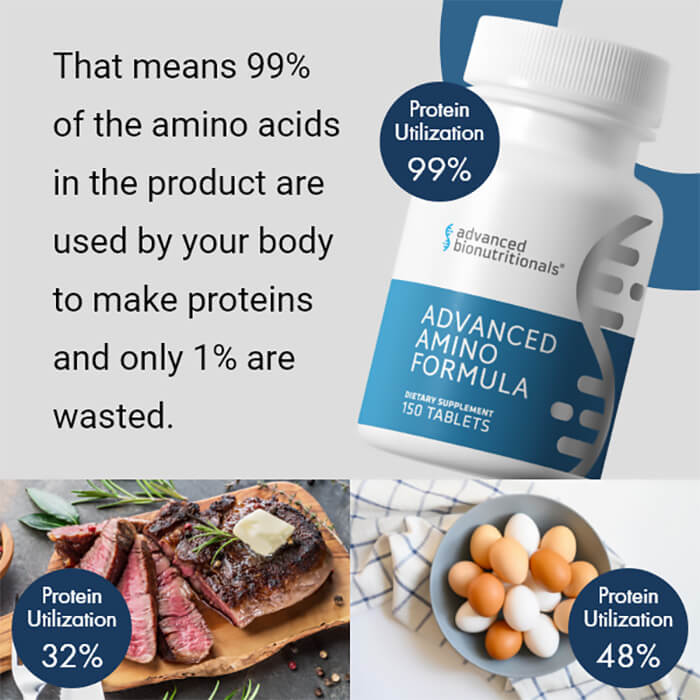
Advanced Amino Formula (Advanced BioNutritionals) is a tablet product with a free-form blend of eight essential amino acids: leucine, valine, isoleucine, lysine, phenylalanine, threonine, methionine, and tryptophan. Product materials commonly describe about a 5,000 mg proprietary blend per serving (often five tablets). Always follow the live label for serving size and directions.
Why it can fit a restart: compact support for amino acid tablets for muscle recovery after inactivity without demanding a complicated nutrition overhaul on week one—especially when travel, illness recovery, or messy schedules make thick shakes feel like one more chore.
Honest limits (read these before you buy):
- Eight EAAs are listed; histidine is not included. Many nutrition references list nine essential amino acids. The manufacturer argues histidine is not needed in the formula because levels can rise after use; treat that as a manufacturer position, not a universal nutrition consensus.
- The total blend amount is clearer than per-amino milligram breakdowns on many labels.
- Marketing language about absorption or utilization should be treated as manufacturer claims—not your personal forecast.
- People with PKU (phenylalanine restriction) or significant kidney or liver disease need clinician guidance on concentrated amino acids.
- This product is a dietary supplement, not a medicine, and it is not a substitute for rehabilitation, protein-containing food, or progressive training.
One user, Jacqui, described better energy and muscles that felt like they were “waking up and working.” In a restart article, treat that as optional color—a feeling of responsiveness some people report—not evidence that inactivity is undone by a bottle.
If tablets fit your restart routine and the checklist below matches where you are, review the current offer here: Advanced Amino Formula.
Buyer checklist for post-inactivity EAA use
Use this before you order anything:
- Are you cleared and moving again? If the break was medical and you are still mostly in bed, fix clearance and gentle mobility first.
- Is the goal rebuild—or avoidance? Tablets cannot replace the session you keep postponing.
- Is food protein still happening? Tablets top up; they do not erase empty plates.
- Do you understand 8 vs 9 EAAs / histidine? Know the label before you compare products.
- Will you take the dose on tired restart days? Consistency beats perfection.
- Have you checked live guarantee and label terms? Verify on the product page before ordering—do not rely on remembered prices.
- Can you tell effort from sharp pain? Effort is expected in a restart; sharp joint pain is a stop sign.
- Is this the right article for your problem? If your main issue is chronic low appetite (not a recent break), our appetite/top-up guidance may fit better than a restart frame.
Buy if / skip if (short)
Consider buying if you are cleared, already walking and doing light strength work, and want compact free-form essentials while meals catch up.
Skip for now if you expect a bottle to replace loading, you have PKU or major kidney/liver concerns without clinician OK, or you are not yet cleared after serious illness or surgery.
FAQ
Why does strength drop after time off?
Less mechanical loading plus normal age-related changes in how muscle uses protein. The drop can feel unfairly fast after 50—especially after bed rest, illness, or a long travel stretch.
How soon can EAA help after inactivity?
They may support amino-acid intake once you restart movement and meals. There is no honest “day three transformation” timeline. Think weeks of consistent training and patience with function metrics (stairs, carries, chair stands).
Tablets vs waiting for full meals?
Keep meals. Use tablets as support when you are rebuilding and want compact essentials around that effort—not as a delay tactic for eating and lifting. Free form amino acids for recovery are a bridge, not a meal replacement.
Can amino acids help after travel fatigue?
They may help you cover essentials when routines are messy, if you also resume walking and light strength work. Travel fatigue alone is not fixed by any supplement. Jet lag and short sleep still need recovery habits.
Can EAAs rebuild strength after 50 by themselves?
No. Essential amino acids to rebuild strength after 50 work best with progressive loading and adequate food protein. Hierarchy stays the same: training → food → sleep → optional tablets.
Are amino acid tablets useful after bed rest?
They may support intake during the return to movement, alongside clinician-guided rehab and protein-containing meals. They are not a substitute for getting out of bed safely and rebuilding load under appropriate guidance.
Bottom line
Getting back on your feet after 50 is less about finding a perfect product and more about restarting the signal muscle understands: progressive work, repeated often enough to matter.
Amino acid tablets for muscle recovery after inactivity can support that restart. Keep training first, food second, tablets third. Stay patient with the timeline. Measure wins by function—stairs, carries, chair stands—not by whether a bottle feels dramatic on day two.
If that hierarchy matches where you are, you can inspect Advanced Amino Formula as one tablet option—eight listed essential amino acids, clear limits, and no promise that a bottle replaces the comeback work.
Lace up. Stand up from the chair. Then decide whether a top-up belongs beside the plan—not above it.


