
After 50, living through hernia repair — often inguinal, sometimes ventral or incisional — and the weeks that follow rarely stays “just a bulge story.” Lifting that once felt ordinary now feels risky. Training slots that used to stick get cancelled when recurrence fear, temporary lift limits, or “I’ll wait until the mesh feels forever safe” wins the calendar. Protein portions look reasonable on the plate and somehow never finish when recovery evenings, appointment mornings, or wiped cooking energy steal the meal. Surgical follow-ups, imaging check-ins, and clearance conversations that eat mornings. Progressive resistance that gets postponed “until I can trust a deadlift forever,” “until this groin tightness stops surprising me,” “until after the next surgical-team visit,” or “until I can brace without worry again.” Grip softens. Sit-to-stand feels heavier. Jars and grocery bags ask more of your hands. Cooking shrinks because recovery evenings, unfinished plates, appointment mornings, or wiped evenings leave the kitchen empty — or full of ultra-safe defaults that never match what your thighs still need. A fair fear creeps in: is this only successful hernia repair — or am I also losing strength I will need for daily life?
.jfif "Hernia Surgery Muscle Loss After 50\" meta_description: \"After hernia repair after 50, lift fear and cancelled training can soft-steal muscle. Protect it with surgeon clearance, RT when cleared, protein, optional EAAs")
That cascade is the everyday face of hernia surgery muscle loss after 50 — less from a single scare headline alone, more from what lift fear, recurrence worry, cancelled progressive sessions, temporary activity limits, and recovery-week meal disruption quietly delete: progressive loading and protein you can actually finish. That lived pattern also drives searches for inguinal hernia repair muscle loss after 50, hernia repair lifting restrictions muscle after 50, post-hernia under-loading after 50, fear of hernia recurrence cancel training after 50, laparoscopic vs open hernia repair soft strength after 50, protect muscle after inguinal hernia repair after 50, and does hernia repair cause muscle loss after 50.
So: does hernia repair cause muscle loss after 50? The honest answer is careful. Hernia surgery itself is not a magic muscle thief in a blog sentence — and it is also not a guarantee that lean tissue will stay untouched. What often steals strength in midlife is the cascade around it: lift and recurrence fear that cancels progressive resistance, temporary lifting restrictions that become open-ended zero-loading seasons, recovery weeks that leave protein unfinished, “wait until the repair feels forever safe” seasons that erase loading, and appointment weeks that leave the kitchen empty. Research-minded conversations often discuss associations between older adults with inguinal hernia and lower muscle mass or grip in some cohorts, temporary trunk or lower-limb function loss early after open repair more than laparoscopic repair in some study contexts, and sarcopenia framing that appears more around ventral or abdominal-wall repair outcomes than as proof that every inguinal repair “destroys” muscle. Associations are not a personal diagnosis. This page will not invent “hernia repair causes sarcopenia X%,” claim that tablets alone rebuild lean mass, invent DIY heavy core or max lifts against surgeon orders, invent “ignore sudden severe groin/belly pain / irreducible bulge / fever / vomiting / chest pain” stacks, or treat an amino-acid bottle as hernia therapy, a mesh fix, or a recurrence-prevention plan. And the fix is not an amino-acid bottle dressed up as surgical aftercare, a meal-replacement for your team’s recovery plan, a sarcopenia cure, or permission to abandon surgical-team care and progressive strength work when cleared.
This Miracoulia Health guide explains what careful practice says about lean-mass and strength associations after hernia repair, unfinished protein on recovery evenings, cancelled training from lift fear, and midlife muscle; how “wait until the repair feels forever safe” weeks quietly steal training and protein; and where free-form essential amino acid tablets can fit as compact support when post-hernia recovery weeks disrupt finished protein meals — without pretending a tablet fixes mesh, prevents recurrence, replaces the surgical recovery plan, rebuilds muscle without cleared loading, or cures sarcopenia.
Educational note: This article is educational, not medical advice. It does not diagnose incarceration, strangulation, mesh complication, hernia recurrence as a lab diagnosis, sarcopenia, malnutrition, depression, or any other condition. It is not a surgical aftercare protocol, a DIY invent-heavy-core / max-lift plan against surgeon orders, a full hernia encyclopedia, a remake of bariatric sleeve/bypass staged protein (#62 — pouch/dumping stays that spine; this owns hernia repair / inguinal (and related) lift-fear under-loading), a gallbladder / cholecystectomy fat-intolerance remake (#63 — fat fear stays that spine), a hospitalization bed-rest remake (#32 — brief co-travel only if peri-op days appear), a joint-replacement remake (#53/#56), a lower-back remake (#24), an osteoporosis/fracture-fear remake (#25), a lifestyle lose-weight-without-losing-muscle remake (#15), an alcohol remake (#19), or a substitute for your surgeon’s / surgical team’s / physical therapist’s plan. Associations in research and clinical discussions are not the same as “your softer strength equals hernia-repair sarcopenia.” Questions about sudden severe groin or belly pain, an irreducible bulge, fever, vomiting, chest pain, or concerning post-op symptoms belong with your surgical team promptly — never DIY ignore sudden severe groin/belly pain / irreducible bulge / fever / vomiting / chest pain; never invent heavy core or max lifts against surgeon orders because of a supplement article. Never skip surgical-team care for red flags. Never invent DIY heavy core / max-lift plans against orders. Training plans, protein targets, and supplements vary with clinical context and recovery stage. Talk with the care team (and the dietitian when available) before concentrated amino-acid supplements if you have PKU, kidney or liver disease, a protein-restricted diet, or complex medications. Individual results vary. Focus here is midlife hernia surgery / inguinal (and related) repair after 50 → lift/recurrence fear + cancelled progressive RT + recovery meal disruption under-loading and muscle protection — not a shake product page and not a remake of #62 bariatric, #63 gallbladder, #32 hospitalization, #53/#56 joint replacement, #24 lower-back, #25 osteoporosis, #15 lifestyle weight-loss, or #19 alcohol. Depression HOLD — distinct-from marker only; not written as an organizer. Those spines live in separate Miracoulia pieces — this one owns the post-hernia lift-fear + under-loading after 50 pathway.
Feeling softer after hernia repair is a midlife pattern — not a “surgery failed” lecture
Conversations about protect muscle after inguinal hernia repair after 50 and inguinal hernia repair muscle loss after 50 usually start with function and hard weeks, not blame for needing surgery:
- Grip feels softer on jars, bags, or handshakes than a few months ago
- Progressive resistance gets postponed because of “I’ll wait until the repair feels forever safe”
- Sit-to-stand, stairs, or rising from a chair feel more expensive after a stack of cancelled-session or unfinished-protein days
- Temporary lift or core restrictions — surgeon-named limits that were meant to protect healing — become open-ended zero-loading seasons (hernia repair lifting restrictions muscle after 50)
- Recovery evenings and “I’ll eat later when I feel less wiped” leave protein unfinished
- Fear of recurrence turns every training slot and every brace into a negotiation — and strength softens on top (fear of hernia recurrence cancel training after 50)
- Soft recovery or “easy movement only” weeks quietly erase training slots and cooking energy (post-hernia under-loading after 50)
- “I’m protecting the repair forever” becomes a permanent no-strength season without a cleared alternative plan; surgical follow-up and activity clearance stay team-owned — not permission to invent a DIY heavy-core protocol from a blog
- Recovery / appointment evenings mean protein defaults collapse into unfinished plates, skipped dinners, or ultra-safe snacks that never match muscle needs
Does hernia repair cause muscle loss after 50 and hernia surgery muscle loss after 50 are fair search phrases for related worries — and they are not self-diagnoses from a blog. Protect muscle after inguinal hernia repair after 50 is not about blaming every necessary temporary lift limit when surgical recovery, incision healing, or clinician-directed pause is real, or every surgeon-directed recovery window after laparoscopic or open hernia repair. It is about noticing when lift fear, recurrence worry, unfinished protein, “wait for perfect forever-safe repair” open-ended absences, and care-navigation quietly shrink the stimulus and the building materials muscle still needs — while your surgical / PT team still owns workup, activity clearance, lift restrictions, and red-flag response.
If softer sit-to-stand showed up after post-hernia recovery weeks stacked up, start with the broader signs of muscle loss after 50. On recovery or lift-restriction weeks, keep the bigger habit stack from how to maintain muscle after 50 — then adapt protein and training to what your surgical team clears. Never treat a general maintain guide as permission to DIY ignore sudden severe groin/belly pain / irreducible bulge / fever / vomiting / chest pain, invent heavy core or max lifts against orders, or train against red-flag surgical symptoms.
This piece is distinct from our bariatric sleeve/bypass staged protein (#62 — pouch/dumping stays that spine), gallbladder / cholecystectomy fat intolerance (#63 — fat fear stays that spine), hospitalization / bed-rest (#32 brief co-travel only), joint replacement (#53/#56), lower-back pain (#24), osteoporosis / fracture fear (#25), lifestyle lose-weight-without-losing-muscle (#15), alcohol (#19), stress (#18), poor sleep (#17), low appetite alone (#2 — appetite may appear as a brief adjacent pointer only), and protein-per-meal distribution (#12 — aside only). Here the organizing problem is hernia surgery / inguinal (and related) repair after 50 — and what that does to progressive loading, finished protein consistency, and muscle protection. Bariatric pouch stages stay in #62; gallbladder fat intolerance stays in #63; hospital bed-rest stays in #32; joint replacement stays in #53/#56; lower-back stays in #24; fracture fear stays in #25; lifestyle weight-loss without this surgical pathway stays in #15.
What research-minded practice says (careful hernia / sarcopenia / trunk-strength framing — associations only)
Headlines about hernia repair and midlife muscle loss are easy to oversimplify into “surgery always destroys muscle,” “never lift until the repair feels forever safe,” “only walk lightly and skip progressive loading forever,” “mesh rebuilds muscle by itself,” “EAAs prevent recurrence so you can ignore progressive loading and the surgical plan,” “cure lift fear with this aisle bottle,” or “buy a bottle of amino acids and ignore the surgical team.”
Useful, careful points that keep repeating in research-minded coaching and clinical explainers:
Older adults with inguinal hernia and lower muscle mass / grip — associations, not a blog diagnosis: Research-minded conversations often discuss observational associations between older adults with inguinal hernia and lower muscle mass or grip strength in some cohorts. That supports a surgical-team / PT conversation about strength/function assessment, activity clearance, and finishable protein — it does not prove that every softer handshake equals “hernia-repair sarcopenia,” and it does not invent personal odds. Does hernia repair cause muscle loss after 50 is everyday search language for that worry — not a self-diagnosis from a blog. Do not invent trial percentages, sample sizes, or “X% of people after hernia repair lose muscle” headlines here. Hernia surgery muscle loss after 50 and inguinal hernia repair muscle loss after 50 are everyday search language for the same careful question. Surgery alone does not rebuild or destroy lean mass as a blog claim with personal odds; the practical bridge is often cancelled loading and unfinished protein on top of recovery physiology and midlife anabolic resistance.
Temporary trunk / lower-limb function after open vs laparoscopic repair — careful early theme: Some study contexts discuss temporary trunk or lower-limb function loss early after open repair more than after laparoscopic repair. That is a careful research-minded theme about early recovery differences — not a personal lifelong sentence, not a reason to invent DIY heavy core against orders, and not proof that tablets alone restore trunk strength. Laparoscopic vs open hernia repair soft strength after 50 is fair search language for that early difference — use it as a reminder that early recovery weeks deserve protein you can finish and progressive loading when cleared — not as invented personal odds or a claim that one approach “destroys” muscle forever.
Ventral / abdominal-wall repair and sarcopenia framing — brief co-travel only: Sarcopenia discussions appear more around ventral or abdominal-wall repair outcomes than as proof that every inguinal repair destroys lean mass. Brief co-travel only — this page’s spine stays inguinal / common hernia repair under-loading after 50.
Lift / recurrence fear and temporary restrictions commonly barrier progressive exercise: Careful coaching often finds that fear of recurrence, temporary lifting limits, groin tightness, or “wait until the mesh feels forever safe” stop or modify progressive resistance for a share of adults after hernia repair. That is why fear of hernia recurrence cancel training after 50, hernia repair lifting restrictions muscle after 50, and post-hernia under-loading after 50 are lived phrases. Fixing activity clearance is team-owned; fixing under-loading still needs cleared progressive work.
Surgery “causing sarcopenia” as a solo claim with personal odds is not the claim: Some cohorts show associations with lower muscle indices around hernia contexts; rebuild from mesh or amino-acid tablets alone is not a strong blog claim. Reject “surgery alone caused my muscle loss with personal odds” marketing — not a reason to ignore sudden severe groin/belly pain, irreducible bulge, fever, vomiting, chest pain, or the surgical recovery plan. Keep progressive resistance and finished food protein central. Do not claim tablets alone reverse sarcopenia indices or that optional EAA tablets treat hernia, fix mesh, or prevent recurrence.
Red flags are surgical-team-owned — never DIY ignore incarceration / strangulation warning signs: Sudden severe groin or belly pain, an irreducible bulge, fever, vomiting, or chest pain belong with urgent clinical evaluation — not with a blog “natural hernia stack” or an amino-acid bottle. This page will not invent incarceration self-treatment protocols. Never ignore those red flags. Never treat EAAs as hernia therapy, a mesh fix, or recurrence prevention.
Under-loading is often the everyday thief: Softened strength after hernia weeks often points to cancelled progressive sessions, lift-fear pauses, unfinished protein plates on recovery evenings, and thinner protein days on appointment weeks. Correcting under-loading does not automatically prevent recurrence or fix mesh. Ask your surgical team / PT how strength testing, function, and progressive loading fit your plan while recovery progresses.
Progressive resistance when cleared — not rest forever, not DIY grind against surgeon orders: Careful guidance often supports progressive resistance when cleared — including physical therapy when referred, and whole-body progressive loading when medical and recovery restrictions allow. Permanent zero-loading while waiting for a perfect forever-safe-repair month can still soften grip and sit-to-stand. Unsupervised “push through” during active red-flag surgical symptoms or against post-op lift/core orders can be unsafe. Strength training after hernia surgery after 50 needs that nuance: surgical care is team-led; muscle protection still needs loading and amino acids from food you can finish (optional top-ups only when meals fail). Multimodal nutrition + strength programs in research protocols are clinician-/PT-shaped, not blog DIY heavy core.
Bariatric, gallbladder, hospitalization, joint replacement, back, and lifestyle spines co-travel — asides only, never remakes: Bariatric sleeve/bypass staged protein stays in #62 — brief nod only if someone is comparing surgical pathways; do not remake pouch/dumping. Gallbladder / cholecystectomy fat intolerance stays in #63. Peri-op hospital days may briefly co-travel with #32 — not a remake. Joint replacement stays in #53/#56. Lower-back stays in #24. Osteoporosis / fracture fear stays in #25. Lifestyle lose-weight-without-losing-muscle stays in #15. Alcohol stays in #19. Appetite beyond hernia weeks can point briefly to the Miracoulia when appetite drops after 50 page — adjacent only; do not remake #2. Protein-per-meal (#12) stays an aside. This article owns hernia surgery / inguinal (and related) repair after 50 → lift/recurrence fear + cancelled progressive RT + disrupted protein.
Anabolic resistance is already a midlife story: Aging blunts the response to smaller protein meals and infrequent training. Hernia recovery weeks stack on top through cancelled lifts and unfinished protein days.
Practical takeaway: To protect muscle after inguinal hernia repair after 50, keep clinician / surgical / PT care first (never DIY ignore sudden severe groin/belly pain / irreducible bulge / fever / vomiting / chest pain; never invent heavy core or max lifts against surgeon orders), progressive resistance 2–3× as cleared (post-hernia–aware; respect lift/core restrictions until cleared), food protein + sleep when recovery weeks win the evening, and optional EAA tablets only when hernia weeks disrupt meals. A supplement page does not replace that stack. EAAs are not hernia therapy, not a mesh fix, not recurrence prevention, not a sarcopenia cure, and not a meal-replacement for the surgical plan.
If surgical-team care and PT clearance are already underway — and meals still slip on hernia or lift-fear weeks — you can check the current Advanced Amino 8 EAAs offer after training and protein plans are in place. It is not hernia therapy, not a mesh fix, not recurrence prevention, not a sarcopenia cure, not a meal-replacement for the surgical plan, and not a reason to skip the surgical team or ignore sudden severe groin/belly pain, irreducible bulge, fever, vomiting, or chest-pain red flags.
Pathways that quietly steal muscle (lift fear → unfinished protein → cancelled RT → softer function)
Hernia surgery rarely “steals strength” only through one mysterious surgical headline in everyday midlife life. The practical path is often a stack:
- Hernia repair / similar → lift and recurrence fear — braces feel risky; progressive slots get cancelled (fear of hernia recurrence cancel training after 50 / post-hernia under-loading after 50)
- Temporary lifting restrictions → open-ended zero-loading — surgeon-named limits meant for healing become “never load again” without a cleared alternative (hernia repair lifting restrictions muscle after 50)
- Recovery evenings → smaller finished occasions — “I’ll eat later when I feel less wiped” deletes protein
- Appointment / imaging / clearance weeks → erased training slots — surgical follow-up, PT visits, and recovery mornings quietly delete the progressive week
- “I’ll just walk lightly until the repair feels forever safe” trap — light movement continues while progressive loading for legs, hips, back, and grip vanishes (aside to walking / inactivity spines — not a remake; #15 lifestyle stays separate)
- “Wait until the mesh feels perfect forever” open-ended pause — temporary modification becomes a permanent zero-loading season without a cleared alternative plan (strength training after hernia surgery after 50 is the search when people notice that trap)
- DIY invent heavy core / max lifts temptation — or ignoring incarceration / strangulation red flags — both ignore surgical-team-owned care and red flags
- Ultra-safe cooking collapse → protein slip — unfinished plates, skipped dinners, or snack-only nights replace finished meals
- Mesh-only forever without progressive loading — trusting the repair without stimulus still leaves muscle under-stimulated
- Comparing to #62/#63/#32/#53/#56/#24/#25 as the whole story — brief asides only; organizer remains hernia-repair lift-fear under-loading
- Anabolic-resistance + midlife stack — hard hernia weeks make a weak unfinished protein day cost more after 50
That lived hernia surgery muscle loss after 50 story is often under-loading and under-fueling wearing a surgical costume: lift or recurrence fear cancels progressive work → recovery weeks leave protein unfinished → strength softens → lean tissue takes a hit — when part of what was lost was the training week and the finished protein day. Surgery alone does not rebuild that lean mass as a blog claim; mesh forever does not either.
If the stack above already describes your weeks — surgical / PT care is underway, you are keeping some progressive work as cleared, and meals still collapse on hernia or recovery evenings — check the current Advanced Amino 8 EAAs offer only as a compact option when finished food protein keeps slipping. It is not hernia therapy, not a mesh fix, not recurrence prevention, not a sarcopenia cure, not a meal-replacement for the surgical plan, and not a reason to skip the surgical team, invent DIY ignore-red-flag stacks, invent heavy core or max lifts against surgeon orders, or ignore sudden severe groin/belly pain, irreducible bulge, fever, vomiting, or chest-pain red flags. If you have sudden severe groin or belly pain, an irreducible bulge, fever, vomiting, chest pain, or post-op crisis without surgical-team care, skip or ask first — get care before shopping.
Low-appetite (#2) and protein-per-meal (#12) may co-travel as brief asides. Bariatric (#62), gallbladder (#63), hospitalization (#32), joint replacement (#53/#56), lower-back (#24), osteoporosis (#25), lifestyle weight-loss (#15), alcohol (#19), stress (#18), and sleep (#17) stay in their lanes. The spine here remains hernia surgery / inguinal (and related) repair after 50 → under-loading + muscle protection.
Surgical / PT team first (red flags; never DIY ignore sudden severe groin/belly pain / irreducible bulge / fever / vomiting / chest pain; never invent heavy core or max lifts against surgeon orders)
This page is not a surgical aftercare protocol, a DIY invent-heavy-core / max-lift plan, a bariatric remake (#62), a gallbladder remake (#63), a hospitalization remake (#32), a joint-replacement remake (#53/#56), a lower-back remake (#24), an osteoporosis remake (#25), a lifestyle weight-loss remake (#15), a sarcopenia cure, or a substitute for the plan evaluating and managing your hernia repair recovery, lift restrictions, and activity clearance.
Never DIY ignore sudden severe groin or belly pain, an irreducible bulge, fever, vomiting, or chest pain; never invent heavy core or max lifts against surgeon orders; never claim EAAs replace the surgical recovery plan because of an affiliate article. Activity clearance, lift/core restrictions, imaging or lab follow-up, and red-flag response belong with a qualified surgeon / surgical team / physical therapist who knows your history. If you have sudden severe groin or belly pain, an irreducible bulge, fever, vomiting, or chest pain, contact the care team promptly — do not invent “natural hernia forever stacks” from a blog while red flags are active.
Never self-diagnose lean-mass severity, invent DIY heavy core against orders, or pick an aisle bottle to “prevent recurrence forever” from internet checklists. Activity clearance, lift protocol, and follow-up are clinical. Maximalist “natural cure” tutorials and DIY heavy-core lists are not a prescription — and can be unsafe when incarceration/strangulation warning signs, fever, vomiting, or chest pain are active.
PT-led progressive return — loud care path: Supervised progressive loading after hernia repair is a common cornerstone in research-minded surgical pathways. Ask your team about lift restrictions, core bracing cues, return-to-lift timelines, and finishable protein. That conversation is not permission to invent heavy core against orders or treat an amino-acid bottle as a meal-replacement for the surgical plan.
Adjacent surgical spines — brief asides only: #62 bariatric, #63 gallbladder, #32 peri-op hospital, #53/#56 joint, #24 back, #25 fracture fear, #15 lifestyle stay separate. This page owns hernia-repair lift-fear + under-loading.
Practical care-first reminders (not medical protocols): bring a clear symptom and function list (lift fear, restrictions, cancelled training, unfinished protein, red flags, surgeon activity rules) to your surgical or PT visit; ask about activity clearance and recovery-aware progressive loading when cleared; report sudden severe groin/belly pain, irreducible bulge, fever, vomiting, or chest pain early; do not self-start DIY ignore-red-flag or invent-heavy-core stacks; ask before concentrated amino acids if you have PKU, kidney or liver disease, or a protein-restricted diet. Adjacent spines (#62/#63/#32/#53/#56/#24/#25/#15/#19/#2/#12/#17) stay brief asides only.
Surgical-/PT-first care is the loudest rule on this page — louder than every CTA that follows.
Progressive resistance 2–3× as cleared (post-hernia–aware; respect lift/core restrictions until cleared)
Strength training after hernia surgery after 50 remains one of the clearest muscle-specific levers — when cleared and paced to recovery stage, lift/core restrictions, surgical limits, medical limits, and how stable your recovery is.
Useful, careful coaching points (not a personal prescription):
- Aim for progressive resistance 2–3× weekly as cleared, not a forever pause until a perfect forever-safe-repair month arrives
- Prefer short, honest sessions over heroic workouts you abandon after one hard lift-fear or recurrence-worry week
- Scale load and exercise selection to what your surgeon / PT clears — especially after marked weakness, early post-op windows, incision or groin concerns your team named, temporary lifting restrictions, or active red-flag evaluation
- Plan bracing and load progressions so fear of recurrence does not become an automatic cancel (fear of hernia recurrence cancel training after 50)
- Keep a minimum stimulus alive when relatively stable: sit-to-stand progressions, hip hinges, upper-body pushes/pulls, and carries as cleared beat “I’ll wait forever” — respect lift/core restrictions until cleared
- Short sessions beat zero — and beat “I’ll restart when the mesh feels perfect forever” seasons; if sudden severe groin/belly pain, irreducible bulge, fever, vomiting, or chest pain appear, stop and seek clinical guidance
- Prefer a physiotherapist familiar with abdominal-wall / inguinal surgery and midlife strength when available; respect surgeon-named activity rules after laparoscopic or open hernia repair — never invent DIY heavy core or max lifts against orders
- Keep low-setup progressive options and protein defaults ready so a lift-fear day does not delete the week
Walking helps habit when cleared but rarely replaces progressive loading for protect muscle after inguinal hernia repair after 50 or strength training after hernia surgery after 50. Careful progressive work as cleared addresses the stimulus without remaking #15/#32/#62/#63 spines.
Training creates the demand. Surgical-/PT care manages recovery and lift restrictions. Food protein supplies building materials. Optional EAA tablets stay downstream — never hernia / mesh / recurrence therapy — and only when meals fail.
Keep progressive loading fundamentals on build muscle after 50; adapt only with post-op clearance — never invent DIY heavy core or max lifts against surgeon orders. Never treat a general strength article as a DIY invent-heavy-core or ignore-red-flag protocol.
If surgical-team care is already underway, progressive work is returning as cleared, and hernia or recovery evenings still leave protein unfinished — check the current Advanced Amino 8 EAAs offer only after training and food-protein plans are in place. It is not hernia therapy, not a mesh fix, not recurrence prevention, not a sarcopenia cure, not a meal-replacement for the surgical plan, and not permission to skip the surgical team or ignore sudden severe groin/belly pain, irreducible bulge, fever, vomiting, or chest-pain red flags.
Food protein + sleep when recovery weeks win the evening
Muscle still needs amino acids. Hernia weeks — evenings when recovery fatigue truncates dinner, lift-fear days that somehow miss building materials, appointment mornings that delete cooking energy, or “easy food only” days that never finish a protein plate — often delete them. That pattern is also why people search essential amino acids when hernia recovery weeks disrupt meals after 50 and EAA tablets after hernia surgery after 50: post-hernia recovery weeks can disrupt routines even when the surgical recovery plan itself is the right clinical path.
Keep food protein the default — protein you can actually finish on hard recovery evenings, inside your team’s guidance:
- Include a finishable protein source at the meals you can complete most days — eggs if tolerated, dairy if cleared, fish, poultry or lean meat in meal-appropriate preparation, tofu or legumes if they fit your plan, leftovers, a simple shake when that is more realistic than a long cook on a hard recovery evening — follow your team’s protocol, not a blog menu
- Do not let “my recovery evening ate the meal / my appointment wiped my cooking motivation / my lift-fear erased dinner” become a zero-protein day when you still need building materials — earlier-day protein occasions, prep-ahead portions inside team guidance, or shake options your clinician approved still count
- Prioritize protein near training when schedule and comfort allow — earlier-day protein occasions can help when evenings are the hard recovery or lift-fear window
- If cooking collapses on hard recovery or lift-restriction days, smaller finishable protein-dense portions still beat an empty day; optional EAA tablets bridge only after food-first intent is clear and never as a meal-replacement for the surgical plan
- Plan meal timing around clearance visits and PT sessions when that reduces stress — without inventing protein rules against clinician orders
You need damage control inside a hard hernia week: one or two finishable protein-forward occasions inside the surgical plan — not a #12 remake. Appetite (#2) and sleep (#17) stay brief asides. Do not invent a “hernia muscle-healing diet,” ignore-red-flag stacks, or DIY invent-heavy-core from a blog.
Sleep belongs with protein defaults — not as a full short-sleep remake. Protect a basic sleep window when you can.
When meals stay unfinished on hernia weeks that disrupt protein — the case behind EAA tablets after hernia surgery after 50 — a compact option is Advanced Amino 8 EAAs — see the live bottle terms after food-first intent is clear and your surgical / PT plan is underway. Tablets do not replace a protein meal plan, and they do not fix mesh, prevent recurrence, act as hernia therapy, or rebuild muscle without training. Sudden-severe-groin/belly-pain / irreducible-bulge / fever / vomiting / chest-pain red flags that need surgical-team care = get care first; skip or ask before shopping.
If low appetite is the whole story beyond hernia weeks, use Miracoulia’s adjacent appetite page as a pointer only — then return here. That is not a remake of #2, #62, #63, or #15.
Where free-form EAA tablets fit when hernia weeks disrupt meals
When you are weighing essential amino acids when hernia recovery weeks disrupt meals after 50, compact free-form tablets can help if lift fear, recovery fatigue, appointment weeks, temporary restrictions that shrink cooking energy, or low cooking motivation after hard post-op days make finished protein meals unreliable — as compact support, not as hernia therapy and not as mesh, recurrence-prevention, or sarcopenia substitutes.
EAA tablets after hernia surgery after 50 make the most sense if:
- You are under surgical / PT management for recovery, lift restrictions, and follow-up (never DIY ignore sudden severe groin/belly pain / irreducible bulge / fever / vomiting / chest pain; never invent heavy core or max lifts against orders)
- Your surgical recovery plan and any PT referral are underway — with clearance for progressive return and finishable protein
- You are still training (even lightly) with care-team-safe, post-hernia–aware parameters — or restarting as cleared
- Protein intake is clearly slipping because recovery evenings, unfinished plates, or lift-fear days are winning
- You need something easier than another full meal-prep session on a hard recovery day — without treating tablets as a meal-replacement for the surgical protocol
- You do not have active sudden severe groin/belly pain, irreducible bulge, fever, vomiting, or chest pain needing urgent care before any supplement shopping
This is different from bariatric sleeve/bypass staged protein (#62), gallbladder / cholecystectomy (#63), hospitalization (#32), joint replacement (#53/#56), lower-back (#24), osteoporosis (#25), lifestyle lose-weight-without-losing-muscle (#15), alcohol (#19), low-appetite alone (#2), protein-per-meal (#12), stress (#18), and sleep spines. Here the spine is hernia surgery / inguinal (and related) repair after 50 → muscle protection, with tablets as optional support when meals stay unfinished — never hernia / mesh / recurrence / sarcopenia therapy and never a meal-replacement for the surgical plan.
For the amino-acid basics behind a compact top-up when hernia weeks shrink finished meals, read essential amino acids after 50 — and stress surgical / PT clearance for your recovery plan before treating any EAA suggestion as a recurrence workaround.
When Advanced Amino 8 EAAs is a reasonable option (buy-if/skip-if)
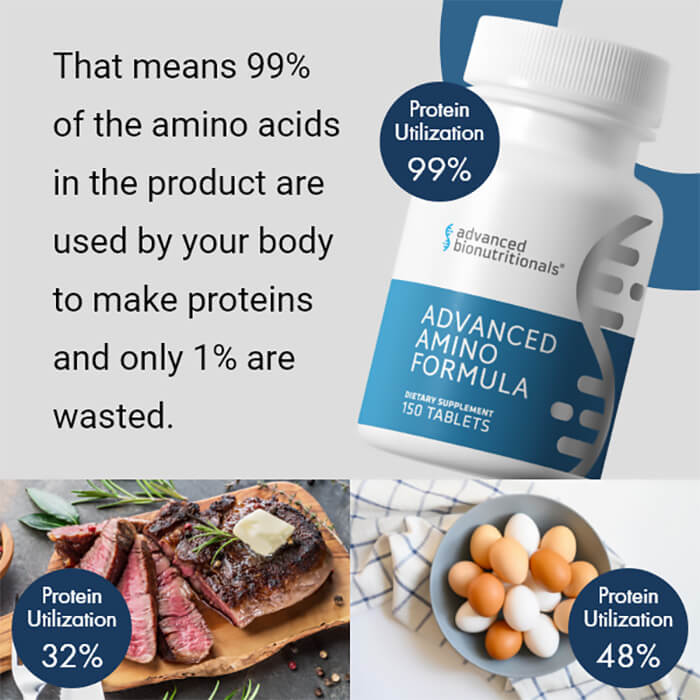
Advanced Amino 8 EAAs is a tablet product with a proprietary free-form blend of eight essential amino acids (histidine not included / no histidine on the standard listing). Materials commonly describe about a 5 g (~5,000 mg / ~5000 mg) blend across five tablets per serving. Follow the live label — do not invent doses or prices from a blog.
Buy-if: you are navigating hernia repair (often inguinal; ventral/incisional may co-travel) after 50; surgical / PT evaluation, lift restrictions, and follow-up care are underway; you still lift 2–3× weekly as cleared (or are restarting lightly with clearance, post-hernia–aware; respecting lift/core restrictions); you protect finishable food protein most days when you can inside the surgical plan; and you want a compact EAA option when hernia recovery weeks keep meals skipped, unfinished, or undersized because recovery fatigue and lift fear disrupted cooking.
Skip-if: you hope tablets fix mesh, prevent recurrence, act as hernia therapy, replace the surgical recovery plan as a meal replacement, replace progressive strength work, or cure sarcopenia; you will not address finishable protein at meals inside your team’s plan; you want a DIY ignore-red-flag plan, a forum DIY invent-heavy-core stack against orders, permission to skip surgical-team care, or permission to ignore sudden severe groin/belly pain, irreducible bulge, fever, vomiting, or chest-pain red flags; you have sudden severe groin or belly pain, an irreducible bulge, fever, vomiting, chest pain, or post-op crisis without clearance — get care first; skip or ask before shopping; you have PKU or significant kidney or liver disease without clearance; you need a full nine-EAA profile and this label’s eight-amino design (no histidine) is a deal-breaker.
Limits: not hernia therapy, not a mesh fix, not recurrence prevention, not a muscle-loss cure, not a meal-replacement for the surgical plan, and not a prescription substitute; EAAs do not replace surgical / PT decisions or replace progressive training; 8 vs 9 EAAs; blend transparency is total-first (proprietary blend); not a meal replacement; manufacturer claims are claims, not guaranteed personal results; check the live offer page for current pricing — this page does not invent prices or trial percentages. Surgical-/PT-first care applies before every CTA on this page.
If the buy-if stack above already matches your weeks and surgical / PT care is in place, review Advanced Amino 8 EAAs here as the next step only after training and protein — never instead of surgeon orders, and never while red flags are active.
Hierarchy reminder (hernia / repair edition)
Keep the order honest even when lift fear, recurrence worry, and cancelled sessions feel loud:
- Clinician / surgical / PT plan first — recovery, lift/core restrictions, activity clearance; never DIY ignore sudden severe groin/belly pain / irreducible bulge / fever / vomiting / chest pain; never invent heavy core or max lifts against surgeon orders; never claim EAAs replace the surgical recovery plan
- Progressive resistance 2–3× per week as cleared (post-hernia–aware; respect lift/core restrictions until cleared; short sessions beat zero; do not wait months with zero progressive stimulus for a perfect forever-safe-repair month — and do not grind unsafe sessions against red flags or against orders)
- Food protein + sleep — finishable protein defaults that survive recovery evenings and lift-fear days (not a remake of #2 / #12 / #17 / #15 / #62 / #63)
- Optional EAA tablets as compact support when hernia weeks keep meals unfinished — never as hernia therapy / mesh fix / recurrence prevention / sarcopenia cure / meal-replacement for the surgical plan
That hierarchy is how you fight hernia surgery muscle loss after 50 without buying a bottle while ignoring red flags — or abandoning strength after one lift-fear week forever — or expecting amino acids to fix mesh, prevent recurrence, replace the surgical plan, or rebuild muscle without progressive loading and finishable food protein. Surgery alone does not rebuild lean mass as a blog claim; mesh forever does not either.
Who should be careful / red flags
Pause and get personalized advice if you have:
- Questions about activity clearance, lift/core restrictions, or recovery timelines — take those to the surgical / PT team, not a supplement cart
- Sudden severe groin or belly pain — seek clinical guidance promptly
- An irreducible bulge — seek clinical guidance promptly
- Fever — seek clinical guidance promptly
- Vomiting — seek clinical guidance promptly
- Chest pain — seek clinical guidance promptly
- Sudden severe or rapidly worsening weakness — seek clinical guidance promptly
- Frailty, high fall risk, PKU, or significant kidney or liver disease — ask before any concentrated amino-acid product
- A pattern where hernia weeks delete both finished protein and training — fix care coordination, clearance adherence, and cleared training first; any urge to DIY ignore red flags or invent heavy core against orders belongs with your surgical team, not a supplement cart
- Adjacent questions that belong in #62 bariatric, #63 gallbladder, #32 hospital, #53/#56 joint, #24 back, #25 osteoporosis, #15 lifestyle, #19 alcohol, #2/#12/#17 — those spines stay separate
Muscle protection outranks grinding through unsafe sessions. Essential amino acids are not treatment for hernia, mesh, or recurrence risk. Do not DIY ignore sudden severe groin/belly pain / irreducible bulge / fever / vomiting / chest pain. Do not invent heavy core or max lifts against surgeon orders. Do not claim EAAs replace the surgical recovery plan. Unstable surgical red flags / unclear post-op status without surgical-team care = get care first; skip concentrated EAAs or ask first.
FAQ
Does hernia repair cause muscle loss after 50?
Hernia repair after midlife can sit alongside cancelled progressive sessions and unfinished protein meals on recovery evenings, and older adults with inguinal hernia may show lower muscle mass or grip in some observational cohorts — carefully, as associations that are not a personal diagnosis and without inventing personal odds or “X%” headlines. Temporary trunk or lower-limb function loss can appear early after open repair more than laparoscopic repair in some study contexts — a careful acute theme, not a lifelong personal sentence. Sarcopenia framing appears more around ventral/abdominal-wall repair outcomes than as proof that every inguinal repair destroys muscle. Associations are not a personal diagnosis. Surgery alone does not rebuild or destroy lean mass as a blog claim with personal odds; the practical bridge is often under-loading and unfinished protein on top of recovery physiology and midlife anabolic resistance. Stay with surgical / PT care; keep progressive training and finishable protein in the plan when cleared. Amino-acid tablets do not fix mesh and are not recurrence prevention. Does hernia repair cause muscle loss after 50 is a fair question — the honest answer stays careful and surgical-team-first. That is the practical meaning behind searches for hernia surgery muscle loss after 50, inguinal hernia repair muscle loss after 50, and post-hernia under-loading after 50.
Can fear of hernia recurrence cancel training after 50 — and what should I do?
Yes — recurrence worry, temporary lift limits, groin tightness, and “wait until the mesh feels forever safe” commonly stop or modify progressive exercise in lived coaching conversations, and that cancelled progressive work is a real midlife muscle risk. Fear of hernia recurrence cancel training after 50 and post-hernia under-loading after 50 are fair lived phrases. Stay with surgical / PT activity clearance; use post-hernia–aware progressive resistance when cleared; respect lift/core restrictions until cleared; protect finishable protein; do not wait forever for a perfect never-worry month while never loading as allowed. A supplement bottle alone is not a complete strength plan, and it is not hernia therapy, a mesh fix, or recurrence prevention.
How do I protect muscle after inguinal hernia repair after 50?
Follow clinician / surgical / PT care first (never DIY ignore sudden severe groin/belly pain / irreducible bulge / fever / vomiting / chest pain; never invent heavy core or max lifts against surgeon orders; never claim EAAs replace the surgical recovery plan). Keep progressive resistance 2–3× weekly when cleared (post-hernia–aware; respect lift/core restrictions until cleared; short sessions beat zero). Eat protein you can finish inside team guidance, protect sleep, and consider EAA tablets only when meals stay unfinished — not as hernia therapy / mesh fix / recurrence prevention / sarcopenia cure / meal-replacement for the surgical plan. That is the practical stack behind protect muscle after inguinal hernia repair after 50 and hernia repair lifting restrictions muscle after 50.
Can I do strength training after hernia surgery after 50?
Often yes — when cleared and paced to recovery stage, lift/core restrictions, incision or groin concerns your team named, and medical restrictions. Strength training after hernia surgery after 50 belongs inside surgeon-cleared, recovery-aware progressions. Waiting forever for perfect forever-safe-repair confidence while never loading as allowed is how under-loading seasons grow. Do not invent a protocol from a blog if you have sudden severe groin/belly pain, an irreducible bulge, fever, vomiting, or chest pain. Walking helps when cleared but does not fully replace progressive strength work. Bariatric (#62), gallbladder (#63), lifestyle weight-loss (#15), joint replacement (#53/#56), and hospitalization (#32) stay separate spines.
What about lifting restrictions, unfinished protein, and muscle after hernia repair after 50?
Hernia repair lifting restrictions muscle after 50 and unfinished protein after hernia recovery weeks usually mean temporary surgeon-named limits plus recovery fatigue leave progressive RT cancelled and protein unfinished, and lean tissue softens on top of midlife anabolic resistance — not a self-diagnosis from a blog, and not proof that surgery alone rebuilds or destroys lean mass with personal odds. Surgical-team-first care, cleared progressive loading that respects restrictions until cleared, food protein inside the team plan, and sleep sit above any optional tablet. Appetite beyond hernia weeks (#2) and protein-per-meal (#12) may co-travel as brief asides — they are not this page’s organizer. Bariatric pouch/dumping (#62) and gallbladder fat intolerance (#63) stay separate — this owns hernia-repair lift-fear under-loading. Laparoscopic vs open hernia repair soft strength after 50 may briefly co-travel as an early-function theme; ventral hernia repair sarcopenia after 50 may briefly co-travel — the spine stays inguinal / common hernia repair under-loading.
Can EAA tablets help when hernia recovery weeks disrupt protein meals after 50?
They may help cover essential amino acids when meals stay unfinished — if training remains as cleared and surgical / PT care is underway. They will not fix mesh, prevent recurrence, act as hernia therapy, replace the surgical recovery plan as a meal replacement, replace progressive strength work, or cure sarcopenia. Prefer finishable food protein first inside your team’s plan. Follow the live label and your care team — especially with sudden severe groin/belly pain, irreducible bulge, fever, vomiting, or chest-pain red flags: get care first; skip or ask before shopping. That is the honest use case for essential amino acids when hernia recovery weeks disrupt meals after 50, EAA tablets after hernia surgery after 50, and can EAA tablets help when hernia recovery weeks disrupt protein meals after 50.
Bottom line
Hernia surgery muscle loss after 50 is usually cancelled progressive training and unfinished protein under-loading wearing a surgical costume: lift and recurrence fear cancel progressive work, temporary lifting restrictions become open-ended zero-loading seasons, recovery weeks leave protein unfinished, strength softens, lean tissue takes a hit — on top of careful observational associations between older adults with inguinal hernia and lower muscle indices in some cohorts, temporary early trunk/lower-limb function themes after open vs laparoscopic repair, and midlife anabolic resistance. Surgery alone does not rebuild lean mass as a blog claim with personal odds; mesh forever does not either. Bariatric (#62), gallbladder (#63), hospitalization (#32), joint replacement (#53/#56), lower-back (#24), osteoporosis (#25), lifestyle weight-loss (#15), alcohol (#19), appetite (#2), and protein-per-meal (#12) may co-travel as brief asides — they are not this page’s organizer. Depression HOLD — distinct-from marker only; not written as an organizer.
Defend the minimums. Stay with clinician / surgical / PT care — never DIY ignore sudden severe groin/belly pain / irreducible bulge / fever / vomiting / chest pain, never invent heavy core or max lifts against surgeon orders, never claim EAAs replace the surgical recovery plan. Lift on purpose with cleared post-hernia–aware progressive work when your team supports it — respect lift/core restrictions until cleared. Eat protein you can finish. Protect sleep. Then, if hernia recovery weeks keep collapsing finished meals, get the details on Advanced Amino 8 EAAs after training and protein are in place — after care and habits, not instead of them, and never as hernia therapy, a mesh fix, recurrence prevention, a sarcopenia cure, or a meal-replacement for the surgical plan. Sudden-severe-groin/belly-pain / irreducible-bulge / fever / vomiting / chest-pain red flags / DIY ignore-red-flag temptation = get care first; skip or ask first.
Protect the surgical plan. Then protect the muscle.


