
Your hip complains on the first step out of bed, getting into the car, or after a short walk. The physio appointment is booked — or still on the waiting list. Someone said “wear and tear,” “hip osteoarthritis,” or “just take it easy — walk, swim, or cycle until it settles.” And still — the glute on the painful side looks softer. Lateral hip feels under-used. A week of “I’ll skip hinges and bridges” turns into a month without progressive hip or glute work. Protein becomes toast and tea because a full meal feels like too much on a low-mobility day.

That pattern is the everyday face of hip pain muscle loss after 50. It is not a scolding about willpower. It is what happens when hip pain or hip osteoarthritis, fear of loading, Trendelenburg-style gait compensation, and midlife anabolic resistance stack with less strength stimulus and thinner protein days.
So: does hip pain cause muscle loss after 50? It can contribute. Observational, imaging, and clinical literature link hip osteoarthritis and chronic hip pain with reduced hip and thigh muscle strength, gluteal weakness, and functional decline; pain can reduce the loading stimulus muscle needs. It is rarely a solo villain. Aging, sitting, short sleep, inadequate food protein, and training quality all share the stage. And the fix is not an amino-acid bottle dressed up as joint therapy or cartilage repair.
You can check today's Advanced Amino Formula pricing and bottle options here.
This Miracoulia Health guide explains what careful practice says about hip pain, hip osteoarthritis, and midlife glute / hip strength, how pathways quietly steal muscle, and where free-form essential amino acid tablets can fit as compact support when pain weeks disrupt protein meals — without pretending a tablet heals cartilage, replaces physio, cures osteoarthritis, or reverses sarcopenia.
Educational note: This article is educational, not medical advice. It does not diagnose hip osteoarthritis, labral injury, fracture, avascular necrosis, infection, inflammatory arthritis, or sarcopenia. It is not hip-replacement surgery advice, injection protocol guidance, painkiller dosing, physical-therapy prescription, cartilage repair claims, or a substitute for your clinician or physiotherapist’s plan. Associations in research are not the same as “your sore hip equals diagnosis X.” Locking, night pain that wakes you, unexplained limp, sudden one-sided wasting, fever with joint pain, or recent trauma belong with a qualified clinician — not a supplement page. Training plans, protein targets, and supplements vary with clinical context. Talk with a clinician before concentrated amino-acid supplements if you have PKU, kidney or liver disease, a protein-restricted diet, or complex medications. Individual results vary. Focus here is midlife hip pain / hip osteoarthritis and muscle protection — not a cure for OA. If your main story is knee pain and thigh weakness, that spine lives in a separate Miracoulia piece — this one owns the hip and glute pathway.
Feeling softer with hip pain after 50 is a midlife pattern — not a surgery lecture
Conversations about hip osteoarthritis and midlife muscle loss usually start with function, not operating-room fear:
- Getting out of a chair or into a car takes more hip and glute effort
- The glute or lateral hip on the painful side looks or feels softer than the other side
- Walking develops a compensatory limp or Trendelenburg-style “hip drop” pattern some clinicians describe
- Hip hinges, bridges, and lateral / abductor work get postponed because of “I’ll just walk or swim until it settles”
- Protein meals shrink when mobility days shrink appetite or cooking energy
- Fear of “making it worse” cancels progressive loading for weeks
Glute weakness with hip pain after 50 is not about blaming every creak. It is about noticing when hip-pain weeks quietly shrink the stimulus and the building materials muscle still needs.
If you are still sorting whether the softer gait is “just aging,” start with our overview of signs of muscle loss after 50. On flare weeks, keep the bigger habit stack from how to maintain muscle after 50 — then adapt loading to what your clinician or physio allows.
This piece is distinct from our knee-pain / knee-osteoarthritis muscle guide (different joint map: glutes and lateral hip here, not a remake of thigh / stair-quad framing), a walking-vs-resistance remake, a sitting article, an inactivity-restart guide, a diabetes article, a thyroid piece, a weight-loss/deficit article, a protein-per-meal remake, and from before-bed or peri-workout EAA timing guides. Here the organizing problem is hip pain / hip osteoarthritis after 50 — and what that does to glute / hip-abductor strength, gait confidence, and muscle protection. Brief asides about walking, swimming, sitting, or sleep may appear; those spines stay owned elsewhere.
What research-minded practice says (careful hip OA / glute / unloading framing)
Headlines about hip OA and gluteal atrophy after 50 are easy to oversimplify into “hip pain always destroys muscle” or “pain does not matter for strength at all.”
Useful, careful points that keep repeating in research-minded coaching:
Pain, osteoarthritis, and hip / thigh muscle — linked in careful literature: Observational studies, imaging work, and clinical reviews often link hip osteoarthritis and persistent hip pain with reduced hip and thigh muscle strength, gluteal weakness, and functional decline. Treat that as a lifestyle and clinical risk signal, not as proof that every sore step is diagnosed OA or that every person with OA has sarcopenia.
Pain → less loading → deconditioning: When the hip hurts, people naturally unload the painful side, shorten sessions, cancel gym weeks, and substitute “I’ll just walk, swim, or cycle.” Those aerobic options still help health and mood. They do not fully replace progressive strength work for glute and hip muscle. That walking distinction lives elsewhere as a walking article; here swimming and cycling join the same “cardio-only trap” aside.
Gait compensation context (careful): Clinicians and physiotherapists sometimes discuss Trendelenburg-style gait patterns — a compensatory hip drop or trunk lean when lateral hip / abductor strength and control are limited around an irritable hip. That helps explain why the glute and side-hip can feel under-used beyond simple “I’m lazy.” It is a reason to work with a clinician or physio on appropriate loading and gait cues — not a claim that a supplement “turns the glute back on.”
Anabolic resistance is already a midlife story: Aging itself blunts the muscle-building response to smaller protein meals and to training. Hip-pain weeks can stack on top through skipped lifts, selective glute / hip under-loading, and protein under-eating on low-mobility days. Attribute carefully. Do not invent trial percentages, fake sample sizes, or “X% of hip-pain patients lose muscle” headlines here.
Practical takeaway: If your goal is to protect muscle with hip pain after 50, the evidence-minded stack is still clinician/physio-led hip care, joint-friendly progressive resistance, adequate food protein, and sleep. A supplement page does not replace that stack. Attribute what is attributed. Stay humble about causation. Stay practical about the week you actually live.
Pathways that quietly steal muscle
Hip pain rarely attacks muscle only through one cartilage pathway. The practical path is often a stack:
- Pain → less loading — sessions get cancelled; progressive overload disappears; the painful side is favored until the glute and lateral hip soften
- Glute / hip-abductor under-use — hinges, bridges, and lateral work disappear first; literature and clinical practice often highlight hip and gluteal strength deficits in hip OA contexts
- “I’ll just walk / swim / cycle” trap — aerobic movement continues while strength stimulus vanishes for weeks (aside to the walking spine — not a remake)
- Protein under-eating on low-mobility weeks — cooking feels harder; appetite dips; toast replaces a real protein portion
- Anabolic-resistance stack — midlife muscle already needs a clearer stimulus and enough amino acids; fewer lifts + thinner protein days widen the gap
- Fear and flare cycles — one bad day becomes a no-training month; confidence shrinks faster than rest alone “fixes”
Protect muscle with hip pain after 50 means defending those behaviors on purpose while your clinician or physio manages the hip. Biology matters. Habits often matter first.
An irritable hip raises the cost of every good habit. The gym feels riskier. Protein prep feels heavier. A “bad step day” becomes a no-strength week. The stack only needs repeated weeks where stimulus and building materials disappear.
Knee pain can co-travel for some people (a separate Miracoulia piece owns that thigh / stair spine — this article does not remake it). Diabetes or thyroid issues can co-travel too (separate pieces). Sitting or a pure inactivity restart lives elsewhere. The spine here remains hip pain / hip osteoarthritis.
Clinician / physio-led hip care comes first (this page is not OA treatment)
This page is not osteoarthritis treatment, hip-replacement advice, injection protocol guidance, or a physical-therapy prescription.
If you have locking, night pain that wakes you, unexplained limp, sudden one-sided wasting, fever with joint pain, recent trauma, or rapid unexplained weakness, that belongs with a qualified clinician promptly. Do not invent injection schedules, surgical indications, or “natural cartilage cures” from an affiliate article.
Practical care-first reminders (not medical protocols):
- Follow the assessment and follow-up plan your clinician or physiotherapist sets
- Report locking, night pain, unexplained limp, sudden wasting, fever, or rapid change honestly
- Do not self-prescribe heavy loading that your care team has limited
- Ask before concentrated amino-acid supplements if you have kidney, liver, PKU, or complex medication contexts
- If symptoms are severe or rapidly worsening, seek care promptly rather than waiting on a supplement
Muscle protection starts after — and alongside — appropriate clinical and physio care. It does not replace it.
Joint-friendly progressive resistance 2–3×/week (pain-paced; glutes/hips — not a #22 or #14 remake)
Resistance training remains the strongest habit lever for midlife lean mass — including when hips feel irritable — when cleared and scaled.
Aim for roughly two to three progressive sessions weekly when your clinician or physio agrees it is appropriate. Joint-friendly patterns matter: hip hinges within comfort, bridges and hip-extension variations as allowed, lateral / abductor work (bands, side-lying or standing progressions if prescribed), sit-to-stand / squat variations scaled to tolerance, rowing / pulling, and pressing within comfort. Machines, cables, bands, isometric holds, and free weights can all work if the load progresses without chasing ego pain.
Pain-paced training tips (practical, not a PT prescription):
- Keep the appointment with the session even if the load or range is lighter
- Reduce volume or depth before abandoning the week entirely
- Prioritize patterns that transfer to gait and getting out of a chair — often glutes and hips as your clinician/physio allows
- Leave a little in reserve — grinding into sharp joint pain every set rarely helps a midlife hip week
- Distinguish ordinary training discomfort from sharp, swelling-linked, or next-day flare pain — when unsure, ask your physio
- If locking, new unexplained limp, chest pain, or unusual weakness appear, stop and seek clinical guidance
Walking, swimming, and cycling still help health and mood. They do not fully replace progressive strength work for glute and hip muscle. That walking distinction is owned in our walking piece; here the point is simple: strength training with hip pain after 50 is often possible in a joint-friendly, pain-paced form — not a command to “push through” every flare, and not a remake of our knee-pain training section with the joint name swapped.
Progressive loading still matters with irritable hips; see the training hierarchy in build muscle after 50. Training creates the demand. Clinician/physio-led care helps you stay safe enough to adapt. Food protein supplies building materials. Optional EAA tablets stay downstream — never a substitute for the signal, and never joint therapy.
Food protein + sleep (not a remake of protein-per-meal or sleep spines)
Muscle still needs amino acids. Hip-pain weeks often delete them.
Keep food protein the default:
- Include a clear protein source at meals most days
- Do not let “I’m too sore to cook” become a zero-protein day — simpler options still count
- Prioritize protein near training when schedule allows
- If appetite collapses on low-mobility days, smaller protein-dense portions still beat an empty day; optional EAA tablets bridge only after food-first intent is clear
You do not need a full protein-per-meal remake here (that spine lives elsewhere). You need damage control inside a hip-pain week: one or two protein-forward eating occasions you will finish — eggs, fish, poultry, lean meat, dairy if tolerated, tofu or tempeh, legumes, leftovers with a real protein portion, or a simple shake if that is what you will consume.
Practical midlife coaching ranges for active older adults often cluster around roughly 1.0–1.2+ g protein per kg body weight per day for muscle maintenance with training (guides, not prescriptions; kidney limits and clinician advice come first). Spread protein across two to three eating occasions when possible.
Sleep supports recovery and training consistency. Protect a basic sleep window when you can — habit support, not a remake of the poor-sleep article. On flare weeks, “I’ll eat later” often becomes never. Keep defaults ready that survive a sore-hip day.
Where free-form EAA tablets fit when hip-pain weeks disrupt meals
Essential amino acids when hip pain disrupts protein after 50 can help when pain weeks make meals unreliable — as compact support, not as joint therapy and not as cartilage repair.
EAA tablets make the most sense when hip-pain weeks disrupt protein:
- You are still training (even lightly or reduced) with clinician/physio-safe parameters
- Protein intake is clearly slipping because pain, low mobility, or cooking fatigue are winning
- You need something easier than another full meal-prep session on a flare day
- A shake is impractical, unappealing, or hard to fit that day — and tablets are simply more doable
This is different from a before-bed EAA timing article and from a peri-workout timing guide. Here the spine is hip pain / hip osteoarthritis → muscle protection, with tablets as optional support when meals are undersized — never a substitute for physio or clinician care.
For the amino-acid basics behind a compact top-up, read essential amino acids after 50.
Advanced Amino 8 EAAs — honest label
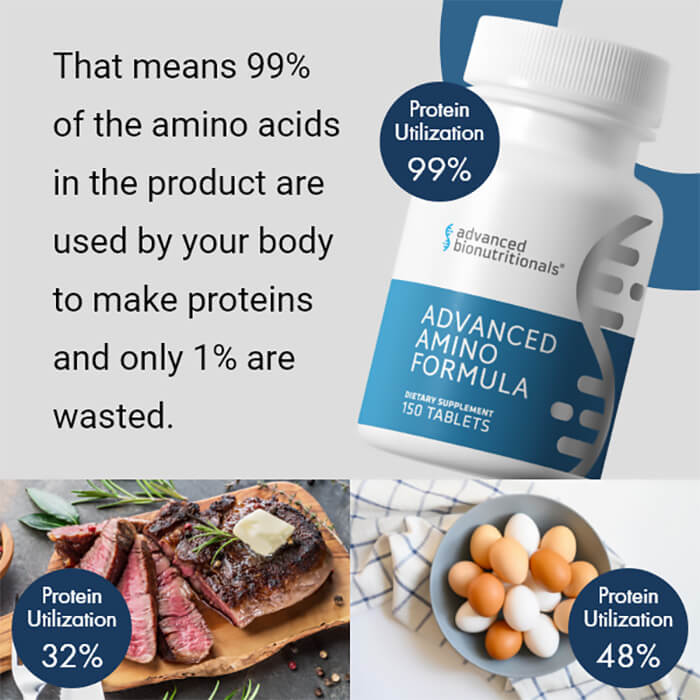
Advanced Amino 8 EAAs is a tablet product with a proprietary free-form blend of eight essential amino acids (histidine not included on the standard listing). Materials commonly describe about a 5 g (~5,000 mg) blend across five tablets per serving. Follow the live label.
Buy-if: you live with clinician/physio-managed hip pain or hip osteoarthritis after 50, you still lift 2–3× weekly (or are restarting lightly with clearance), you protect food protein most days when you can, and you want a compact EAA option when pain weeks make meals skipped or undersized.
Skip-if: you hope tablets replace physio, clinician care, or strength work; you will not address protein at meals; you want joint therapy, cartilage repair, an osteoarthritis cure, a painkiller substitute, or a sarcopenia cure; you have PKU or significant kidney/liver disease without clinician clearance; you need a full nine-EAA profile and this label’s eight-amino design is a deal-breaker.
Limits: not joint therapy, cartilage repair, OA treatment, pain therapy, or a muscle-loss cure; 8 vs 9 EAAs; blend transparency is total-first (proprietary blend); not a meal replacement; manufacturer claims are claims, not guaranteed personal results; check the live offer page for current pricing.
One reader-facing line sometimes shared in manufacturer materials — secondary only — is a customer note that “It Feels Like My Muscles Are Waking Up and Working.” Treat that as a subjective experience report, not a clinical outcome claim or a hip/cartilage result.
If that matches, review the current offer here: Advanced Amino 8 EAAs.
Hierarchy reminder (hip-pain edition)
Keep the order honest even when the hip feels loud:
- Clinician / physio-led hip care — assessment, imaging when indicated, rehab plan; this page is not OA treatment, surgery advice, or injection protocol
- Joint-friendly progressive resistance 2–3× per week (pain-paced; glutes/hips as appropriate)
- Food protein + sleep — defaults that survive flare days
- Optional EAA tablets as compact support when pain weeks make meals slip
That hierarchy is how you fight hip pain muscle loss after 50 without buying a bottle while ignoring the hip — or abandoning strength after one sore week.
Who should be careful / talk to a clinician
Pause and get personalized advice if you have:
- Locking, night pain that wakes you, unexplained limp, or recent trauma
- Sudden one-sided glute / hip wasting or rapid unexplained weakness
- Fever with joint pain, or other red flags your clinician has named
- Unsettled surgical status, recent injection, or a rehab plan you have not followed up
- Significant kidney disease, PKU, or a clinician-directed protein restriction
- A pattern where hip-pain weeks reliably delete both protein and training — fix care coordination and the schedule first
Muscle protection outranks grinding through unsafe sessions. Essential amino acids are not a treatment for hip osteoarthritis, cartilage damage, joint pain, or sarcopenia.
FAQ
Does hip pain cause muscle loss after 50?
It can contribute. Observational, imaging, and clinical literature often link hip pain and hip osteoarthritis with reduced hip and thigh muscle strength and gluteal weakness in some people — and pain can reduce training stimulus. It is usually one factor in a stack with aging, skipped strength work, and under-eating — not a single-cause verdict from any one sore step.
Does hip osteoarthritis cause glute muscle loss after 50?
It can be associated with gluteal / hip-abductor weakness and functional decline. That does not mean every person with OA has a sarcopenia diagnosis, and it does not mean rest alone is the muscle plan. Clinician/physio care plus appropriate loading matter more than a blog label.
How do I protect muscle with hip pain after 50?
Follow your clinician or physiotherapist’s hip plan first. Keep joint-friendly progressive resistance 2–3× weekly with pain-paced loading focused on glutes and hips as allowed. Eat protein on purpose and protect basic sleep. Consider EAA tablets only as optional top-up when meals slip.
Can I strength train with hip pain after 50?
Often yes — with clinician/physio clearance and joint-friendly, pain-paced programming. Do not invent a protocol from a blog if locking, unexplained limp, night pain, or recent trauma is present; ask your care team. Walking, swimming, and cycling help but do not fully replace progressive strength work for glute and hip muscle.
Is walking or swimming enough when hips hurt after 50?
Walking and swimming are valuable for health and mood. For protecting glute and hip muscle, progressive resistance still matters when cleared. Do not let “I’ll just walk / swim / cycle” delete strength for months — the fuller walking-vs-lifting conversation lives in a separate Miracoulia piece.
Can EAA tablets help when hip pain weeks disrupt protein after 50?
They may help cover essential amino acids when meals slip — if the training habit remains and your clinician is fine with concentrated amino acids in your context. They will not treat osteoarthritis, repair cartilage, replace physio, cure joint pain, or replace progressive strength work. Follow the label and your clinician’s advice.
Bottom line
Hip pain muscle loss after 50 is less about a scary one-scan headline and more about what pain weeks steal: strength sessions, glute and lateral-hip loading confidence, protein on low-mobility days, and recovery bandwidth — on top of gluteal-weakness context linked with hip OA and midlife anabolic resistance.
Defend the minimums. Keep clinician/physio-led hip care first. Lift on purpose with joint-friendly, pain-paced work. Eat protein on purpose. Protect sleep. Then, if pain weeks keep collapsing meals, a compact eight-amino option like Advanced Amino 8 EAAs can sit in the stack — after care and habits, not instead of them.
Protect the hip plan. Then protect the muscle.


