
After 50, a prednisone course rarely stays “just a medicine week.”
Sit-to-stand feels heavier. Stairs ask more of your thighs. The strength session gets cancelled “until this steroid course ends.” Arms look flatter. Cooking shrinks to toast because fatigue, mood swings, sleep disruption, or a racing appetite that still somehow skips real protein leave the kitchen empty. A fair fear creeps in: is this only the condition the steroid is treating — or am I also losing strength?

That cascade is the everyday face of prednisone muscle loss after 50 — less from a single scare headline alone, more from what steroid weeks quietly delete: progressive loading and protein you can actually finish.
So: does prednisone cause muscle loss after 50? The honest answer is careful. Oral corticosteroids — and everyday corticosteroid muscle loss after 50 patterns that travel with them — are associated in careful clinical literature with steroid-related muscle weakness and with discussions of corticosteroid-induced myopathy (often affecting proximal muscles such as the hips and thighs). Mechanisms discussed include anti-anabolic and catabolic effects on skeletal muscle, reduced activity from fatigue or side effects, disrupted nutrition, and midlife anabolic resistance. Associations are not a personal diagnosis. Dose, duration, fluorinated vs non-fluorinated agents, age, and baseline fitness all matter in clinical discussions — so this page will not invent trial percentages, sample sizes, or “your odds” headlines. And the fix is not an amino-acid bottle dressed up as steroid therapy, a myopathy cure, a DIY taper plan, or permission to stop prescribed corticosteroids alone.
This Miracoulia Health guide explains what careful practice says about prednisone, corticosteroids, and midlife muscle, how under-loading quietly steals training and protein, and where free-form essential amino acid tablets can fit as compact support when steroid weeks disrupt meals — without pretending a tablet treats the disease that required steroids, replaces clinician taper plans, replaces progressive strength work, or cures sarcopenia.
Educational note: This article is educational, not medical advice. It does not diagnose corticosteroid-induced myopathy, adrenal insufficiency, osteoporosis, infection risk, diabetes from steroids, or sarcopenia. It is not a taper schedule, steroid-sparing protocol, rheumatology curriculum, or a substitute for your clinician’s plan. Associations in research are not the same as “your prednisone dose equals diagnosis X for muscle.” Sudden severe weakness, inability to rise from a chair, chest pain, fever while immunosuppressed, severe mood change, vision changes, black stools, or concerns about adrenal crisis if doses are missed belong with a qualified clinician promptly — never stop, skip, or taper prednisone or other corticosteroids because of a supplement article. Training plans, protein targets, and supplements vary with clinical context. Talk with a clinician before concentrated amino-acid supplements if you have PKU, kidney or liver disease, a protein-restricted diet, or complex medications. Individual results vary. Focus here is midlife prednisone / corticosteroid under-loading and muscle protection — not a cure for the condition steroids treat. If your main story is walking, sitting, sleep, stress, alcohol, diabetes, thyroid, joint pain, osteoporosis, balance, statins, Ozempic / GLP-1, COPD / breathlessness, intermittent fasting, inactivity restart, or generic low appetite, those spines live in separate Miracoulia pieces — this one owns the prednisone / oral-corticosteroid → under-loading pathway.
Feeling softer on prednisone / steroids is a midlife pattern — not a taper lecture
Conversations about steroid myopathy after 50 usually start with function and energy, not pharmacology jargon:
- Rising from a chair, climbing stairs, or getting out of a car feels harder than a month ago
- Progressive resistance gets postponed because of “I’ll wait until this course finishes”
- Thighs, hips, or upper body look or feel softer after weeks of lighter activity
- Fatigue, sleep disruption, mood change, or GI upset shrinks cooking and protein portions
- Fear that “lifting on steroids will make everything worse” cancels the strength appointment for weeks
- Walking continues (when it can) while progressive loading disappears
Protect muscle while on steroids after 50 is not about blaming every prescribed course. It is about noticing when steroid weeks quietly shrink the stimulus and the building materials muscle still needs — while your clinician still owns the steroid plan, the taper when appropriate, and the disease being treated.
If softer legs or slower sit-to-stand showed up after steroid weeks stacked up, start with the broader signs of muscle loss after 50. On low-energy weeks, keep the bigger habit stack from how to maintain muscle after 50 — then adapt protein and training to what your clinician clears.
This piece is distinct from our statin, Ozempic / GLP-1, and COPD guides, diabetes and thyroid pieces, joint-pain muscle guides, osteoporosis and balance pieces, walking / sitting / inactivity restarts, sleep / stress / alcohol spines, intermittent fasting, low-appetite and protein-per-meal remakes, and before-bed or peri-workout EAA timing guides. Here the organizing problem is prednisone / oral corticosteroids after 50 — and what that does to progressive loading, protein consistency, and muscle protection. (COPD articles may mention corticosteroids as one stacked pathway; this page owns prednisone as the organizer.)
What research-minded practice says (careful steroid myopathy / under-loading framing)
Headlines about glucocorticoid muscle weakness after 50 are easy to oversimplify into “prednisone always destroys muscle” or “steroids never matter for strength.”
Useful, careful points that keep repeating in research-minded coaching and clinical explainers:
Corticosteroids and muscle — linked in careful literature: Reviews and clinical discussions often associate systemic glucocorticoids with steroid-related muscle weakness and with corticosteroid-induced myopathy — classically described as proximal, relatively painless weakness (hips and thighs first in many descriptions). Treat that as a lifestyle and clinical risk signal, not as proof that every person on a short course has diagnosed myopathy, or that every soft thigh is “only steroid biology.” Do not invent trial percentages, sample sizes, or “X% of people on prednisone lose muscle” headlines here.
Dose, duration, and agent discussions appear in practice guides: Clinical sources often note higher-risk conversations around higher daily prednisone-equivalent doses and longer courses; fluorinated agents are sometimes discussed as more myopathic in comparative notes. Those are clinician-facing risk talks — not a blog’s permission to invent your personal risk number or change your prescription.
Fatigue / side effects → less activity → deconditioning: Steroid weeks can bring insomnia, mood change, GI upset, blood-sugar swings, or simply feeling “off.” Less progressive loading means less stimulus. That prednisone under-loading muscle after 50 pathway shows up as cancelled sessions and “I’ll rest until the course ends” seasons that become months.
Multiple pathways can stack: Literature discusses anti-anabolic and catabolic effects on muscle protein, inactivity, aging, and nutritional shortfalls. Causal weight differs by person. Associations are not a personal diagnosis from a blog.
Exercise — including resistance — is often discussed as supportive when cleared: Research-minded and clinical sources often recommend physical therapy with resistance and endurance components to help attenuate glucocorticoid-related muscle loss when programs are appropriate. That supports keeping strength work as cleared — it does not let a blog replace supervised rehab or invent a taper.
Anabolic resistance is already a midlife story: Aging blunts the response to smaller protein meals and to training. Steroid weeks stack on top through cancelled lifts and thinner protein days.
Practical takeaway: To protect muscle while on steroids after 50, keep clinician-led steroid and disease care, progressive resistance as cleared, food protein, and sleep. A supplement page does not replace that stack — and never replaces a clinician-directed taper when one is indicated.
Pathways that quietly steal muscle
Prednisone and oral corticosteroids rarely “steal strength” only through one mysterious chemistry headline in everyday midlife life. The practical path is often a stack:
- Fatigue / side effects → cancelled progressive resistance — “I’ll wait until the course ends” replaces gradual strength work
- Fear cycles → thinner training weeks — one bad weak day becomes a no-strength month
- “I’ll just walk” trap — aerobic movement continues (when possible) while progressive loading for thighs, hips, and upper body vanishes (aside to the walking spine — not a remake)
- Protein under-eating on steroid weeks — cooking feels harder; appetite is weird (sometimes high, sometimes low); toast replaces a real protein portion
- Course and taper seasons — dose changes, flares of the underlying condition, and recovery weeks delete stimulus and building materials
- Anabolic-resistance + midlife stack — muscle already needs a clearer stimulus after 50; steroid weeks make a weak protein day cost more
That lived corticosteroid muscle loss after 50 story is often under-loading and under-fueling wearing a medicine costume: steroid weeks feel hard → sessions pause → lean tissue takes a hit — when part of what was lost was the training week and the protein day.
Feeling wiped raises the cost of every good habit. That is why clinician contact and scaled loading matter more than a bottle.
If the stack above already describes your weeks — clinician care is underway, you are trying to keep some progressive work, and meals still collapse on steroid evenings — check the current Advanced Amino 8 EAAs offer only as a compact option when food protein keeps slipping. It is not steroid therapy, not a myopathy cure, and not a reason to skip clinician care or change your taper alone.
Joint pain, statin weeks, GLP-1 appetite crush, COPD breathlessness, diabetes, or balance fear can co-travel (separate Miracoulia pieces). The spine here remains prednisone / oral corticosteroids → under-loading.
Clinician first (never stop or taper prednisone / steroids alone)
This page is not steroid therapy, a taper schedule, steroid-sparing agent advice, a rheumatology curriculum, or a substitute for the plan treating the disease that required corticosteroids.
Never stop, skip, or taper prednisone or other corticosteroids because of an affiliate article. Dose timing, duration, taper speed, steroid-sparing options, bone protection discussions, infection precautions, blood-sugar monitoring, and whether a medicine is right for you belong with a qualified clinician who knows your diagnosis, interacting drugs, adrenal risk, and goals. If weakness worsens suddenly, you cannot rise from a chair, fever appears while immunosuppressed, severe mood or vision changes arrive, you have black stools or severe abdominal pain, or you miss doses and feel unwell in a way your team has warned about, contact a clinician promptly — do not invent “natural steroid replacements” from a blog.
Practical care-first reminders (not medical protocols):
- Follow the steroid plan and follow-up visits your clinician sets
- Ask about taper timing, steroid-sparing options, and bone / glucose / infection monitoring when appropriate — those conversations belong in clinic
- Report sudden severe proximal weakness, inability to stand from a chair, fever, severe mood change, vision changes, or GI bleeding signs early
- Do not self-taper, skip doses, or add unvetted “cortisol blockers” from the internet
- Ask before concentrated amino-acid supplements if you have kidney, liver, PKU, or complex medication contexts
Muscle protection starts after — and alongside — appropriate clinical care. It does not replace it. Guidance-minded care emphasizes staying on prescribed therapy as directed, seeking rehab or physical therapy when indicated, and avoiding fear-driven total inactivity when training is still appropriate — without letting a blog rewrite your prescription.
Steroid-week-aware progressive resistance 2–3×/week as cleared (not a PT or taper prescription)
Resistance training remains the strongest habit lever for midlife lean mass — including during and after corticosteroid courses — when cleared and scaled. Steroid-week-aware pacing helps you keep the appointment with training without treating every fatigued day as a reason to abandon months of progress.
Aim for roughly two to three progressive sessions weekly when cleared. Practical patterns matter: sit-to-stand / squat variations scaled to energy and proximal strength, hip hinges within comfort, carefully progressed carries when cleared, rowing / pulling, pressing within comfort, and machines, cables, bands, or free weights if load progresses without chasing ego. Hero max lifts on high-fatigue or high-dose days are not the goal.
Steroid-week-aware training tips (practical, not an exercise or taper prescription):
- Keep the appointment with the session even if the load or volume is lighter
- Reduce volume or intensity before abandoning the week entirely — when your clinician still supports training
- Prioritize sit-to-stand, hips, upper back, and carries as allowed — proximal muscles often need the most attention in steroid-week conversations
- Leave a little in reserve — grinding into severe unexpected weakness every set rarely helps
- On higher-fatigue days, carefully cleared lighter patterns can keep the habit alive
- Short sessions beat zero sessions
- If sudden severe weakness, chest pain, unusual dizziness, fever while immunosuppressed, or other red flags appear, stop and seek clinical guidance
- Prefer supervised physical therapy or clinician-cleared programming when available
Walking helps habit and mood. It rarely replaces progressive loading if the goal is to protect muscle while on steroids after 50. Strength training on prednisone after 50 is often possible in a cleared, steroid-week-aware form — not a remake of joint, balance, osteoporosis, statin, GLP-1, or COPD training sections with the steroid label swapped.
Training creates the demand. Clinician-led steroid care helps you adapt safely. Food protein supplies building materials. Optional EAA tablets stay downstream — never steroid therapy.
Keep the broader strength conversation on build muscle after 50 and how to maintain muscle after 50 — this article stays on the prednisone / corticosteroid → under-loading path.
Food protein + sleep when steroid weeks win the evening (not a #12 or #17 remake)
Muscle still needs amino acids. Steroid weeks — fatigue, weird appetite, insomnia, “I’m too wiped to cook” evenings, or snack-heavy days that somehow skip a real protein portion — often delete them.
Keep food protein the default:
- Include a clear protein source at the meals you can finish most days
- Do not let “I’m too wiped / too wired to cook” become a zero-protein day — simpler, smaller options still count
- Prioritize protein near training when schedule and energy allow
- If appetite collapses or becomes chaotic, smaller protein-dense portions still beat an empty day; optional EAA tablets bridge only after food-first intent is clear
You do not need a full protein-per-meal remake here. You need damage control inside a steroid week: one or two protein-forward occasions you will finish — eggs, Greek yogurt, soft fish, poultry, lean meat, dairy if tolerated, tofu or tempeh, cottage cheese, leftovers, or a simple shake. Prep-ahead helps when cooking feels costly. (If steroids raise blood sugar, ask your clinician about meal timing — this page does not prescribe diabetic plans.)
Practical midlife coaching ranges for active older adults often cluster around roughly 1.0–1.2+ g protein per kg body weight per day with training (guides, not prescriptions; kidney limits and clinician advice come first). On fatigue weeks, finish what high-quality protein you can. Spread protein across the hours you eat.
Sleep supports recovery. Protect a basic sleep window when you can — steroid insomnia belongs in the clinician conversation, not a remake of the poor-sleep article. Keep defaults ready that survive a wiped evening.
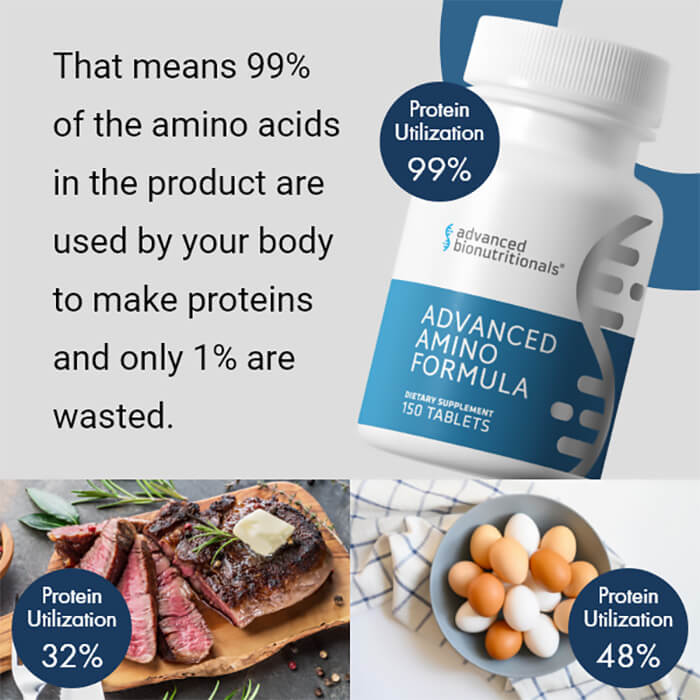
When meals stay tiny on prednisone weeks, a compact option is Advanced Amino 8 EAAs — see the live bottle terms after food-first intent is clear. Tablets do not replace a protein meal plan, and they do not treat steroid myopathy.
If low appetite is the whole story beyond steroid weeks, see when appetite drops after 50 — then return here for the prednisone-specific protect-muscle hierarchy.
Where free-form EAA tablets fit when steroid weeks disrupt meals
Essential amino acids when steroid weeks disrupt protein after 50 can help when corticosteroid weeks make meals unreliable — as compact support, not as steroid therapy and not as a myopathy cure.
EAA tablets when prednisone weeks disrupt meals after 50 make the most sense when:
- You are still under clinician-managed steroid and disease care (never self-stop or self-taper)
- You are still training (even lightly or reduced) with clinician-safe parameters — or enrolled in / cleared for physical therapy
- Protein intake is clearly slipping because fatigue, appetite chaos, or low cooking energy are winning
- You need something easier than another full meal-prep session on a wiped day
- A shake is impractical, unappealing, or hard to fit that day — and tablets are simply more doable
This is different from a before-bed EAA timing article, a peri-workout timing guide, a generic appetite encyclopedia, and a protein-per-meal remake. Here the spine is prednisone / oral corticosteroids → muscle protection, with tablets as optional support when meals stay undersized — never a substitute for clinician care, taper plans, or progressive strength work, and never steroid therapy.
For the amino-acid basics behind a compact top-up, read essential amino acids after 50.
When Advanced Amino 8 EAAs is a reasonable option (honest label + buy-if/skip-if)
Advanced Amino 8 EAAs is a tablet product with a proprietary free-form blend of eight essential amino acids (histidine not included on the standard listing). Materials commonly describe about a 5 g (~5,000 mg) blend across five tablets per serving. Follow the live label.
Buy-if: you are on clinician-managed prednisone or other oral corticosteroids after 50 (or recovering from a recent course); you still lift 2–3× weekly (or are restarting lightly with clearance / PT guidance); you protect food protein most days when you can; and you want a compact EAA option when steroid weeks keep meals skipped or undersized.
Skip-if: you hope tablets replace clinician care, taper plans, physical therapy, or strength work; you will not address protein at meals; you want a steroid antidote, myopathy cure, cortisol-blocker substitute, a sarcopenia cure, or permission to stop prescribed corticosteroids; you have PKU or significant kidney/liver disease without clinician clearance; you need a full nine-EAA profile and this label’s eight-amino design is a deal-breaker.
Limits: not steroid therapy, not a myopathy cure, not a taper substitute, not a sarcopenia cure, and not a muscle-loss cure; 8 vs 9 EAAs; blend transparency is total-first (proprietary blend); not a meal replacement; manufacturer claims are claims, not guaranteed personal results; check the live offer page for current pricing.
One reader-facing line sometimes shared in manufacturer materials — secondary only — is a customer note that “It Feels Like My Muscles Are Waking Up and Working.” Treat that as a subjective experience report, not a clinical outcome claim or a prednisone / steroid-myopathy result.
If the stack above is already real, review Advanced Amino 8 EAAs here.
Hierarchy reminder (prednisone / corticosteroid edition)
Keep the order honest even when steroid weeks feel loud:
- Clinician-managed steroid and disease care — dosing, taper when appropriate, monitoring; this page is not permission to stop or change prescribed therapy alone
- Progressive resistance 2–3× per week as cleared and tolerated (steroid-week-aware)
- Food protein + sleep — defaults that survive fatigue and appetite-chaos days
- Optional EAA tablets as compact support when steroid weeks keep meals tiny
That hierarchy is how you fight prednisone muscle loss after 50 without buying a bottle while ignoring clinician care — or abandoning strength after one wiped week — or quitting steroids without clinical guidance.
Who should be careful / talk to a clinician (red flags)
Pause and get personalized advice if you have:
- Sudden severe proximal weakness or inability to rise from a chair
- Fever while on immunosuppressive doses, chest pain, or unusual dizziness with activity
- Severe mood change, vision changes, black stools, or severe abdominal pain
- Questions about taper timing, steroid-sparing options, bone density, glucose, or infection risk
- Frailty, fall risk, significant kidney disease, PKU, or a clinician-directed protein restriction
- A pattern where steroid weeks delete both protein and training — fix care coordination first
- Any urge to stop or taper prednisone because of internet content — take that to your clinician, not a supplement cart
Muscle protection outranks grinding through unsafe sessions. Essential amino acids are not treatment for steroid myopathy, prednisone side effects, or sarcopenia. Do not stop or taper prednisone or other corticosteroids on your own.
FAQ
Does prednisone cause muscle loss after 50?
It can contribute. Careful literature associates systemic corticosteroids with steroid-related muscle weakness and discussions of corticosteroid-induced myopathy (often proximal). Inactivity from fatigue, nutrition shortfalls, aging, and other pathways often stack. Associations are not a personal diagnosis. Protect training and protein while your clinician manages the steroid plan — and never stop or taper prescribed therapy alone.
Does corticosteroid therapy cause muscle weakness after 50?
It can. Clinical discussions of glucocorticoid muscle weakness after 50 and steroid myopathy often highlight proximal weakness. Dose, duration, agent type, and baseline fitness matter in those discussions. Rest alone is not the muscle plan when training is still cleared.
How do I protect muscle while on prednisone after 50?
Follow your clinician’s steroid and disease plan first. Keep progressive resistance 2–3× weekly with steroid-week-aware loading when cleared. Eat protein you can finish on fatigue days and protect basic sleep. Consider EAA tablets only as optional top-up when meals stay tiny — not as steroid therapy.
Can I strength train while taking prednisone after 50?
Often yes — with clinician clearance and progressive, steroid-week-aware programming. Short sessions beat long absences. Do not invent a protocol from a blog if you have sudden severe weakness, fever while immunosuppressed, chest pain, or other red flags. Walking helps but does not fully replace progressive strength work.
What is steroid myopathy after 50?
Steroid myopathy after 50 is a clinical discussion of corticosteroid-related muscle weakness — often proximal (hips/thighs), relatively painless in classic descriptions. Diagnosis and management belong with a clinician. This article does not diagnose it. Physical therapy and dose adjustment when clinically appropriate are clinician-led topics; amino acids are not a myopathy cure.
Can EAA tablets help when prednisone weeks disrupt protein meals after 50?
They may help cover essential amino acids when meals stay tiny — if training remains and your clinician is fine with concentrated amino acids in your context. They will not treat steroid myopathy, replace taper plans, replace progressive strength work, or cure sarcopenia. Follow the label and your clinician’s advice.
Bottom line
Prednisone muscle loss after 50 is usually under-loading and under-fueling wearing a steroid-week costume: the course feels hard, sessions pause, protein slips, lean tissue takes a hit — on top of careful corticosteroid–muscle associations in the literature and midlife anabolic resistance.
Defend the minimums. Keep clinician-led steroid and disease care first — and never stop or taper prednisone alone. Ask about physical therapy or rehab when it fits. Lift on purpose with cleared, steroid-week-aware progressive work. Eat protein on purpose when you can finish it. Protect sleep. Then, if steroid weeks keep collapsing meals, get the details on Advanced Amino 8 EAAs after training and protein are in place — after care and habits, not instead of them, and never as steroid therapy.
Protect the steroid plan with your clinician. Then protect the strength.


