
You walk every day. The watch celebrates the steps. Then the stairs feel harder, the grocery bags feel heavier, and getting up from a low chair takes more of a push than it used to.

That mismatch is why so many people ask: is walking enough to maintain muscle after 50? Walking is one of the best habits you can keep for heart health, mood, blood sugar, and everyday function. It is also usually not enough alone to maintain whole-body muscle — especially upper body and the kind of strength that only shows up when load increases over time.
This Miracoulia Health guide explains what walking does well after midlife, what it does not load, why public-health style guidance pairs aerobic activity with muscle-strengthening work at least two days a week, how a simple beginner resistance plan fits a walking lifestyle, where protein sits, and when free-form essential amino acid tablets can help as compact support if you are starting strength work or navigating busy weeks — without replacing food or training.
Educational note: This article is educational, not medical advice. It does not diagnose sarcopenia, frailty, or any disease. Training plans, protein targets, and supplements vary with joint history, balance, medications, kidney health, and clinical context. Talk with a qualified clinician before concentrated amino-acid supplements if you have phenylketonuria (PKU), kidney or liver disease, a protein-restricted diet, or complex medications. Individual results vary. If you have fall risk, uncontrolled pain, or recent surgery, get clearance before adding resistance work.
What walking does well after 50
Walking deserves credit. Keep it. For many adults over 50, consistent walking supports cardiovascular fitness, metabolic health context, joint-friendly movement, lower-body endurance, and mood. The question is not “walk or lift” — whether steps alone are a complete muscle-maintenance plan. Usually they are not.
See muscle loss after 50 and how to maintain muscle after 50.
What walking does not load
Walking leaves gaps: upper body, progressive overload, high-threshold strength, and uneven stimulus. You can be “active” on paper and still lose the strength midlife independence needs. Walking helps a lot; resistance work covers what walking leaves behind. Distinct from restarting after long inactivity — here you already walk, and muscle still slips.
Public-health style guidance: aerobic and strength
Keep walking. Add strength training 2 days a week over 50 at minimum (ideally 2–3 joint-friendly sessions). That pairing answers walking vs resistance training after 50. For build context: build muscle after 50.
A simple beginner resistance plan (2–3× per week)
~20–40 minutes: squat/sit-to-stand, hinge, push, pull, carry/brace. Progress one lever at a time. Many people walk most days and lift two or three.
Protein baseline
Practical coaching ranges often cluster around ~1.0–1.2+ g/kg/day with training (guides, not prescriptions). Food first; spread across meals. Protein does not replace the walking-vs-resistance decision.
When EAA tablets may help
Compact support when starting strength after 50 or busy weeks shrink meal quality — not a substitute for lifting or a walk-only miracle. Foundation: essential amino acids after 50 · EAA vs BCAA.
Where Advanced Amino tablets fit
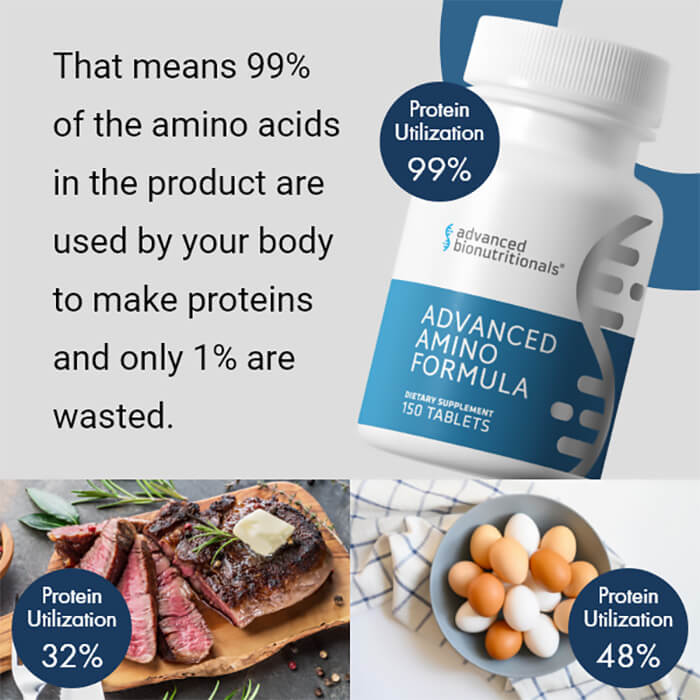
Advanced Amino Formula — free-form blend of eight EAAs (~5,000 mg / often five tablets; no histidine; proprietary blend). Fit: you walk, you lift (or will), food protein is serious, and you want a compact top-up. Skip if you refuse resistance work or need all nine EAAs disclosed individually.
Review the offer: Advanced Amino Formula.
Hierarchy
- Resistance training 2–3×/week
- Food protein
- Sleep
- Supplements only when meals undershoot
FAQ
Bottom line
Walking is worth keeping. It is rarely enough alone. Add progressive resistance 2–3×/week, feed protein first, sleep, and use EAA tablets only when meals undershoot while strength work is real.
Inspect Advanced Amino Formula after the walking-plus-lifting plan is on the calendar.


