
The set is done. Bars are racked, the band is unhooked, and your heart rate is settling. Someone younger in the gym is already shaking a thick protein bottle. You eye yours and feel… heavy. Not lazy — just full from lunch, a little warm, and not eager to drink another dairy smoothie before the drive home. Tomorrow the stairs still feel sticky. That familiar gap between “I trained” and “my muscles got what they need” is why adults start searching essential amino acids after workout after 50.

This Miracoulia Health guide covers realistic peri-workout amino acids after 50: what the so-called anabolic window actually means in midlife, when free-form essentials can help around resistance training, why post workout EAA tablets older adults sometimes beat another shake, and why none of that replaces the session, the next real meal, or sleep.
Educational note: This article is educational, not medical advice. It does not diagnose or treat sarcopenia or any disease. Talk with a qualified clinician before concentrated amino-acid supplements if you have phenylketonuria (PKU), kidney or liver disease, a protein-restricted diet, or complex medications. Individual results vary.
Why peri-workout timing matters after 50
Resistance training is the main signal. Nutrition is the materials delivery. After midlife, that delivery often needs to be clearer because of anabolic resistance: older muscle typically needs a stronger training and amino-acid signal to raise muscle protein synthesis the way it did at thirty.
That does not mean you must slam a shake in the locker room within thirty minutes or “lose the workout.” Modern reviews of protein timing generally find that total daily protein and consistent training matter more than a panic countdown. Still, for muscle recovery after strength training over 50, it is practical to bring amino acids into a useful window around the session — before, soon after, or with the next meal — rather than training hard and then going four empty hours on coffee alone.
Think in hours, not in a stopwatch. A pre-session snack, a post-session compact serving, or a solid meal within a couple of hours all count as peri-workout support. The goal is fewer long gaps when muscle is repairing and remodeling after loading.
For the broader picture of early functional change, see muscle loss after 50: signs, causes, and what helps. For the EAA foundation beyond workout timing, see essential amino acids after 50: what really works.
Anabolic window after 50: myth vs reality
The old gym slogan — miss the 30-minute window and the set was wasted — is mostly marketing residue. Research on protein around exercise supports a more nuanced story:
- Training sensitizes muscle to amino acids for longer than half an hour.
- Older adults may benefit from a clearer post-training amino-acid supply than younger adults who bounce back on leftovers.
- Daily totals and meal distribution still dominate outcomes over any single stopwatch rule.
So the honest anabolic window after 50 myth vs reality takeaway is: the window is real as a practical priority zone, not a magic death clock. If you train at noon and eat a protein-forward lunch by one, you are already inside a sensible peri-workout pattern. If you train at 6 a.m., skip breakfast, and wait until a late desk lunch, you have left a long dry stretch while recovery is asking for materials.
Free-form amino acids around training are studied in various sports-nutrition contexts as rapidly available essentials. Those trials are educational context. They are not clinical proof that any one commercial tablet bottle will reproduce a lab outcome. Use them as a compact format option — especially when a full food meal is delayed — not as a substitute for progressive loading or total daily protein.
The hierarchy: training → food protein → sleep → then a supplement
Miracoulia’s order does not change because the session just ended.
1. Resistance training
Two to three joint-friendly sessions per week still matter more than tablet timing. Squats or sit-to-stands, a hip hinge, a push, a pull, and a simple carry give muscle a reason to stay. No peri-workout product recreates progressive loading.
2. Food protein
Build the day’s amino-acid supply with real meals. A post-workout tablet does not rescue three low-protein plates. Aim for meaningful protein at breakfast and lunch, not only dinner.
3. Sleep and recovery
Soreness that lingers, sticky stairs, and flat energy often track sleep debt as much as “missed the shake.” Protect the night. Supplement timing cannot fix chronic under-sleeping.
4. Supplements
Only after the first three. Peri-workout amino acids after 50 can be a compact tool — never the whole strategy.
If you want a wider view of how EAAs sit beside training and food (not only the locker-room moment), read essential amino acids after 50: what actually helps maintain muscle, strength and recovery.
Where post-workout EAA tablets fit
Post workout EAA tablets older adults make the most sense when:
- You already resistance-train on a repeatable schedule
- A full whey shake feels heavy, bloating, or awkward right after lifting
- Your next real protein meal is one to three hours away (commute, errands, appointments)
- You want a measured free-form essentials serving without a shaker bottle
- You understand support ≠ guaranteed muscle gain
Skip or pause the peri-workout tablet idea if:
- You barely eat protein all day — fix meals first
- You expect tablets to replace training or a balanced post-training meal
- You need all nine essential amino acids disclosed individually and will not accept a proprietary blend
- You have PKU, significant kidney or liver disease, or clinician advice against concentrated amino acids
- A simple food meal already lands within a couple of hours of training — there is no need to force a pill ritual
EAA tablets vs protein shake after workout is not a purity contest. Shakes deliver more total protein and calories for many people; that is often a strength. Tablets win on logistics: pocketable, no mixing, less volume when appetite or digestion is picky after hard sets. Choose the format that you will actually use consistently after the work is done.
Some readers describe easier next-day willingness to move — less “dead legs,” more follow-through on the next session. One customer, Jacqui, put it this way: “It feels like my muscles are waking up and working.” We treat that as a subjective readiness note tied to training consistency and overall nutrition, not proof that a post-workout tablet rebuilds muscle on its own. Keep the claim light.
Practical peri-workout patterns (no stopwatch panic)
Use these as templates, not commandments:
- Train → meal soon after — Best default. Food first; tablets optional.
- Light snack before → train → meal after — Helpful for early sessions or low-appetite mornings.
- Train → compact EAA serving → meal within 1–3 hours — Useful when the shake feels like too much but the commute is long.
- Train → nothing until late dinner — Weakest pattern after 50; fix this before buying anything.
Best time to take EAA after resistance training seniors is usually “soon enough that you are not fasting through the recovery hours,” not “exactly at minute twenty-nine.” Before the session can also count if that is when you remember and tolerate them better. Consistency beats theater.
An honest look at Advanced Amino Formula
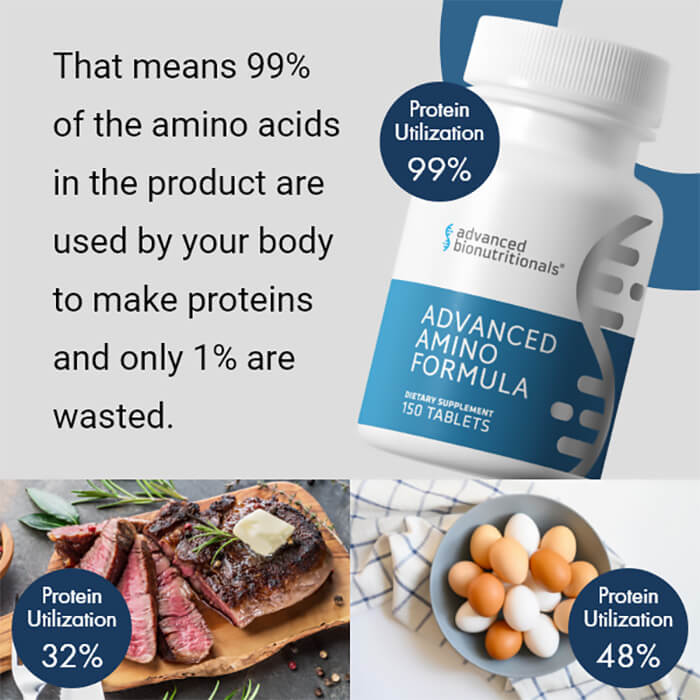
Advanced Amino Formula from Advanced Bionutritionals is a tablet blend marketed as essential amino acid support. Current materials typically describe:
- About 5,000 mg amino-acid blend per five-tablet serving
- Eight amino acids: leucine, valine, isoleucine, lysine, phenylalanine, threonine, methionine, tryptophan
- No histidine — so it is not a complete nine-EAA formula by modern reference lists
- A proprietary blend (total blend listed; individual milligrams per amino acid usually not itemized)
- About 150 tablets / ~30 servings per bottle
- A 90-day satisfaction guarantee on the official offer (verify live terms)
- Package pricing that has commonly appeared around a single bottle near $39.95, plus multi-bottle packs — commercial terms can change, so check the live page
Buy if: you want a compact peri-workout (or anytime) EAA-style tablet option after training and food are already serious priorities, and you accept the label limits above.
Skip if: you need histidine included, full per-amino milligram disclosure, or you mainly need more total daily protein from food or whey.
Manufacturer claims about feeling fitter, stronger, or younger-feeling are company messaging. They are not a clinical guarantee of your post-training muscle protein balance. Always follow the live label for serving size and warnings.
If the format fits your training routine, you can review the current official offer for Advanced Amino Formula — including guarantee and package options — and decide with clear eyes.
FAQ
Should I take essential amino acids after workout after 50?
Possibly, if you already lift and your next protein meal is delayed or another shake feels too heavy. It is optional timing support, not a required ritual for every adult over 50.
Is the anabolic window real after 50?
As a short “30 minutes or else” rule — mostly no. As a reminder to feed muscle in the hours around training — yes, especially when anabolic resistance and long post-session gaps are in play.
Can EAA tablets replace a post-workout shake?
Not as a full substitute for total daily protein. Food or a complete protein drink still carries more protein grams and other nutrients. Tablets are a concentrated essentials option when volume, digestion, or convenience is the bottleneck.
Before or after lifting — which is better?
Whichever you will do consistently. After training is the classic habit; before can help if mornings are empty. Neither timing wins if you skip progressive resistance work.
Do post-workout aminos guarantee less soreness tomorrow?
No. Soreness has many causes: new exercises, sleep, stress, total protein, and normal remodeling. Resistance training recovery amino acids after 50 can support the materials side; they do not erase every stiff stair.
Who should be more careful?
Anyone with PKU (phenylalanine), kidney or liver disease, metabolic disorders, significant illness, or complex prescriptions should ask a clinician before using concentrated amino-acid products.
Soft close
A finished session is not finished nutrition. After 50, muscle deserves a clearer amino-acid signal in the hours around training — without turning the locker room into a superstition. Train with purpose, eat real protein, protect sleep, and only then decide whether post workout EAA tablets older adults help you close a real peri-workout gap.
If a tablet blend of eight essential amino acids fits that last step — without replacing the first three — Advanced Amino Formula is one option to evaluate on the official page, guarantee and all. Keep expectations practical. Better next-day willingness to train is welcome. A magic thirty-minute miracle is not the sales pitch we use here.


