
If you are over 50, you may notice something odd after a vacation or work trip: stairs feel steeper, hotel gym sessions feel flatter, and your usual strength takes longer to return. That is not only jet lag. Essential amino acids travel after 50 often means navigating hotel breakfasts, airport snacks, and interrupted training that quietly open a protein gap on trips after 50. This Miracoulia Health guide explains why that gap shows up on the road, why many travelers prefer EAA tablets for travel over shaker bottles, and how a free-form blend like Advanced Amino Formula can fit as a practical third layer—after resistance training, food protein, and sleep.

Educational note: This article is for information only. It is not medical advice, diagnosis, or treatment. Talk with your clinician before starting any amino acid supplement, especially if you have kidney disease, are on a protein-restricted diet, or have phenylketonuria (PKU). Individual results vary.
The real travel problem after 50 is not “missing gym culture”
Most travel-supplement articles talk to athletes packing powders for contests. Our readers are different. You may care more about carrying luggage without a flare-up, walking long airport corridors, keeping balance after a red-eye, or finishing a short hotel-gym session that still feels worthwhile.
After midlife, muscle protein synthesis often becomes less efficient. When meals are delayed, protein quality drops, or training is skipped for several days, older adults can feel the dip sooner than younger travelers. Call it a protein gap on trips after 50: not a dramatic overnight collapse, but a stretch of underfueled days that leaves you softer, slower, or more fatigued than you expected.
Common trip patterns that widen the gap:
- Hotel breakfasts heavy on pastries, juice, and light eggs—easy to eat, light on complete protein.
- Airport and plane food that is salty, carb-forward, or simply unappealing when appetite is low.
- Interrupted training from early meetings, family schedules, or a gym that is a treadmill and two dumbbells.
- Sleep debt that reduces recovery even when you “ate okay.”
- Low appetite while traveling—stress, time zones, and heat can shrink portions without shrinking your muscle’s need for amino acids.
Independence is the point. Strength on a trip is stairs after the flight, getting out of a low chair, and keeping your routine alive when conditions are imperfect. For the broader signs-and-causes picture at home, see our guide to muscle loss after 50.
What the research actually supports (without the hype)
Resistance training remains the foundation for muscle health with age. Food protein comes next. Sleep and recovery sit beside both. Supplements are optional support—not a replacement for any of those.
Research themes in older adults often suggest that combining resistance training with amino acid–based supplementation (including essential amino acids, BCAAs, leucine, and related compounds) may improve some strength and physical-function measures more than training alone. Effects on muscle mass are frequently limited, and certainty of evidence is often low. In plain language: amino acids may help some strength and function outcomes when paired with training, but they are not a proven shortcut to large muscle-mass gains, and the evidence is not ironclad.
That hierarchy matters for travel. Tablets can help you cover a shortfall when food and training are messy. They cannot undo a week of zero movement or chronic sleep loss.
For a deeper foundation on aging muscle and amino acids at home—not only on the road—see our guide to essential amino acids after 50. For why a broader essential set usually beats a BCAA-only bottle, see EAA vs BCAA after 50. Browse more of Miracoulia Health’s muscle-after-50 articles for related practical reading.
Why EAA tablets for travel often beat shakes after 50
Powder EAAs and whey shakes work well at home. On trips, the friction rises:
- Shakers take space and invite spills in a carry-on.
- Powder can raise questions at security (large powder portions may get extra screening); tablets usually travel more simply in a labeled bottle or pill case.
- Hotel rooms may lack a sink you want to rinse protein residue in.
- Many travelers over 50 prefer not to buy or tolerate dairy-based shakes on the road.
- When appetite is low, swallowing tablets with water is often easier than forcing a thick drink.
EAA tablets for travel are not magically superior biochemically to a well-formulated powder. They win on logistics. For amino acid tablets hotel airport use, the winning product is the one you will actually take between a delayed connection and a late dinner.
If you still keep training while traveling over 50, tablets can sit beside a short session: a few sets of squats to a chair, push patterns with bands, or a hotel-gym circuit. The goal is continuity, not a personal record. For the training-first mindset that still applies on the road, see build muscle after 50.
Advanced Amino Formula: honest product facts
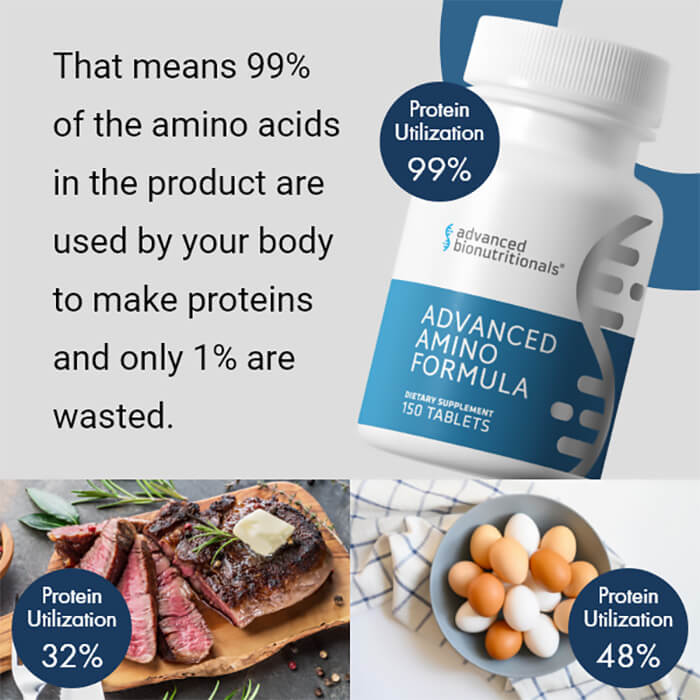
Advanced Amino Formula from Advanced Bionutritionals is a free-form blend of eight essential amino acids:
- Leucine
- Isoleucine
- Valine
- Lysine
- Phenylalanine
- Threonine
- Methionine
- Tryptophan
Important label honesty: it does not include histidine. It is not a full nine-EAA formula. Some manufacturers argue the body can raise histidine when the other EAAs are supplied; that is the brand’s position, not a reason to hide the omission. If you specifically want all nine EAAs in every serving, verify any product’s Supplement Facts before you buy—including this one.
According to typical product information (always verify the live label before purchase):
- Serving size is often about 5 tablets.
- The blend is commonly about 5,000 mg of free-form EAAs per serving.
- A bottle is often about 150 tablets, or roughly 30 servings. Counts and milligrams can change—check the bottle and the product page.
Manufacturer claims also state the formula is free of dairy, gluten, wheat, corn, nuts, seeds, eggs, soy, GMOs, and preservatives, and is vegan (no animal products). That makes it a dairy-free-style option for travelers who avoid milk-based proteins. Still, if you have allergies or dietary restrictions, confirm the current label and your clinician’s guidance.
One customer, Jacqui, described feeling as if her muscles were “waking up and working.” Treat that as a supporting anecdote only. Individual results vary; a testimonial is not a clinical trial, and it is not proof that travel fatigue disappears for everyone.
If tablets fit your travel kit and you want to review the current offer, you can see Advanced Amino Formula details here.
How to close the protein gap on trips after 50
Use this order every time. Supplements come last on purpose.
1. Keep a minimum of resistance work
Two or three short sessions per week beat one heroic workout you skip. Bodyweight, bands, or a basic hotel gym are enough to signal “keep this muscle.”
2. Protect food protein first
Aim for a protein-forward meal or snack at least twice a day: eggs, Greek yogurt if you tolerate dairy, cottage cheese, fish, chicken, tofu, lentils, or a simple deli option that is not only bread. When appetite is low, smaller protein hits still beat pastry-only days. Hotel breakfast protein after 50 is often the easiest win—swap a second pastry for eggs or yogurt when you can.
3. Defend sleep where you can
Even one extra hour, an earlier wind-down, and less late caffeine help recovery more than an extra scoop of anything.
4. Then consider EAA tablets
Use them when:
- Breakfast was carbohydrate-heavy and light on protein.
- You trained and will not eat a solid meal for hours.
- Airport timing wrecked lunch.
- You are between time zones and portions are smaller than at home.
Do not stack tablets on top of already high protein intake without a reason, and do not treat them as meal replacements.
Buyer checklist: packing EAA tablets without regret
Before you pack any portable amino acid tablets over 50—including Advanced Amino Formula—run this list:
- Training + food first. Will you still lift or do resistance work and prioritize protein at meals?
- EAA count. Does the label list eight or nine EAAs? Advanced Amino Formula lists eight and omits histidine—decide if that matches your preference.
- Dose transparency. Can you see milligrams per serving and tablets per serving? Verify live numbers.
- Format. Tablets for luggage simplicity vs powder if you already travel with a shaker.
- Allergen and diet fit. Dairy-free / vegan claims matter only if they match the current label.
- Medical flags. PKU (phenylalanine), kidney disease, pregnancy, or clinician-directed protein limits require professional clearance.
- Expectations. Look for support around energy, training consistency, and function—not miracle muscle in a week.
- Return policy and serving cost. Factor servings per bottle, not only sticker price. We do not invent prices here—check the live offer.
When you are ready to compare servings and the current label, review Advanced Amino Formula on the official page.
FAQ: essential amino acids travel after 50
Why do muscles feel weaker after travel after 50?
Lower training stimulus, uneven protein intake, sleep loss, and more walking fatigue combine. Older adults are often less forgiving of a multi-day protein gap than younger travelers.
Are EAA tablets better than protein powder for trips?
For many people over 50, yes for convenience: no shaker, simpler airport carry, and easier when appetite is low. Nutritionally, a complete meal or a protein food you will eat still comes first. EAA tablets vs protein powder travel is a logistics choice more than a chemistry contest.
Is Advanced Amino Formula a full essential amino acid formula?
It provides eight free-form EAAs and does not include histidine. It is not a nine-EAA product. Read the Supplement Facts and decide based on your goals and clinician advice.
Can amino acid tablets replace hotel breakfast protein?
No. Use them to bridge gaps, not to replace meals. Pair tablets with the best protein food available that day.
Is it safe to take EAA tablets while traveling if I have health conditions?
Not automatically. People with PKU must be especially careful because of phenylalanine. Anyone with kidney disease or protein restrictions should ask a clinician first. This is not medical advice.
What should I do first: buy tablets or fix my trip routine?
Fix the routine: short resistance sessions, protein at meals, and sleep. Add tablets only if those still leave a gap you can predict—airports, late dinners, light hotel breakfasts.
Conclusion: essential amino acids travel after 50 without the hype
Essential amino acids travel after 50 is really about protecting independence when routines break. Hotel breakfasts, airports, and interrupted training create a protein gap on trips after 50 that many older adults feel as weaker stairs, flatter workouts, and slower bounce-back. Keep resistance training, food protein, and sleep at the center. Use EAA tablets for travel when logistics make shakes impractical. If you choose Advanced Amino Formula, do it with eyes open: eight EAAs, no histidine, tablet convenience, and realistic expectations—not miracle claims.
For more Miracoulia context on aging muscle, revisit essential amino acids after 50 and the wider set of Miracoulia Health’s muscle-after-50 articles.
When you want to check the live label, serving size, and current details, visit the Advanced Amino Formula product page.


